


A 2023 textile audit revealed that nearly 60% of garments marketed as artisanal were actually high-speed machine replicas. You likely cherish the ethereal beauty of a hand-embroidered chikankari kurti, yet the uncertainty of finding a genuine piece online often keeps you from making that soulful investment. True elegance shouldn't be a guessing game. It's frustrating to seek a deep connection with the heritage of Lucknow only to be met with fabrics that lack longevity or feel too traditional for your modern Canadian life.
We'll show you exactly how to identify the rhythmic, imperfect beauty of authentic stitches so you can purchase with absolute certainty. You'll also learn to style these exquisite tunics for every occasion, ensuring they become a versatile staple that honors the legacy of the karigars who craft them. This guide provides a clear path to owning a piece of history that fits perfectly into your world, blending ancient Awadhi grace with contemporary poise.
Key Takeaways
- Uncover the rich heritage of Lucknowi grace and how the storied art of Chikan transforms a simple tunic into a masterpiece of Awadhi culture.
- Learn to select the ideal fabric and silhouette to ensure your chikankari kurti drapes with an ethereal elegance suited for your unique frame.
- Master the art of identifying authentic hand-embroidery by recognizing the subtle "imperfections" that distinguish a karigar’s manual labor from mass-produced imitations.
- Explore sophisticated styling techniques to transition your ensemble from casual daytime chic to festive grandeur, including the modern flair of Indo-Western pairings.
- Discover essential preservation rituals to protect the delicate hand-stitched threads of your garment, ensuring its artisanal legacy remains a staple of your wardrobe for years.
What is a Chikankari Kurti? The Heritage of Lucknowi Grace
To wear a chikankari kurti is to drape yourself in the poetic legacy of Lucknow, the famed City of Nawabs. This traditional embroidery style from Lucknow traces its roots back to the 17th century. It flourished under the refined patronage of the Mughal courts and the later Awadhi rulers. The word 'Chikan' itself finds its origin in the Persian word for embroidery, representing a delicate marriage of Persian aesthetics and Indian craftsmanship. Each piece isn't merely manufactured. It's breathed into existence by skilled karigars who spend weeks, or sometimes up to 180 days, perfecting a single garment. This manual labor creates an emotional resonance that mass-produced items can't replicate, offering a tangible connection to the artisan's touch.
The Slow Fashion Philosophy of Chikankari
In a world dominated by the rapid cycles of fast fashion, Chikankari stands as a steadfast guardian of the slow fashion philosophy. Every stitch represents a deliberate choice. There's a soul in the slight irregularities of a hand-stitched hem that the cold uniformity of a machine can't mimic. We believe these garments are handcrafted with love, ensuring that no two pieces are ever identical. For the discerning woman in Canada who values authenticity, these kurtis offer a way to connect with a centuries-old art form that prioritizes quality over sheer volume. It's a commitment to preserving a legacy while celebrating the individual who wears it.
Essential Terminology for the Discerning Buyer
To truly appreciate your chikankari kurti, you must understand the language of the craft. It's more than just thread on fabric; it's a complex vocabulary of texture and light. Key techniques include:
- Bakhiya: Also known as shadow work, this involves intricate herringbone stitches on the reverse side to create a soft, ethereal glow on the surface of the fabric.
- Phanda: These are small, millet-shaped knots that add a tactile, three-dimensional texture to the floral motifs, requiring immense precision from the karigar.
- Muqaish and Kamdani: These refined techniques involve twisting thin metallic wires into the fabric to create a shimmering effect that catches the light beautifully during evening events.
When you browse our collections, we encourage you to view each garment as a piece of art. The hundreds of hours of meticulous labor invested by the artisans ensure that your choice is as unique as your own story. You aren't just buying a tunic; you're becoming a custodian of a royal heritage that has survived through generations of dedicated craftsmanship.
Selecting Your Silhouette: A Guide to Fabrics and Cuts
The foundation of an exquisite chikankari kurti lies in the tactile harmony between the needlework and the base textile. Every stitch tells a story; the fabric determines how that story moves with you. When you select a silhouette, you're choosing more than a garment. You're selecting a canvas that honors centuries of Awadhi heritage while fitting into your modern lifestyle.
Choosing the Right Fabric: Rayon vs. Modal vs. Chiffon
The choice of material dictates the ethereal quality of the hand-embroidery. Rayon offers a cooling, silky texture that flows gracefully with every step. It’s the ideal choice for relaxed co-ord sets like the Ayat collection, where the drape feels like a gentle whisper against the skin. This fabric is particularly favored for its subtle sheen and liquid-like fall.
If you value longevity and breathability, modal cotton stands as a superior alternative. This fabric provides a soft, matte finish that holds the weight of intricate threadwork without losing its shape. The Maira Royal Bloom sets showcase this durability, making them reliable staples for daily elegance. For evening soirées, chiffon and georgette provide a sheer, festive allure. These fabrics are often paired with Muqaish work, where metallic accents catch the light to create a shimmering, regal effect.
Finding the Perfect Fit for Your Body Type
The silhouette you choose defines your presence in a room. A thoughtful cut enhances the artisanal beauty of the embroidery while ensuring you feel confident and poised.
- The Straight Fit: This timeless classic creates a streamlined, elongated profile. It works beautifully for professional settings or formal gatherings in cities like Toronto or Vancouver where a sophisticated look is paramount.
- A-Line and Anarkali: These cuts introduce a sense of volume and movement. They've been a favorite in Lucknow’s courts for generations, offering a regal aesthetic that flatters diverse body shapes through their flared hemline.
- Short Kurtis: For a contemporary edge, short kurtis serve as versatile tunics. They bridge the gap between traditional craft and Western styling. You can find modern inspiration in the Inaya Short Kurti Edit, which pairs perfectly with denim or tailored trousers for an effortless Indo-Western look.
Chikankari’s beauty isn't limited by the calendar. During the humid peaks of a Canadian summer, a light cotton chikankari kurti provides unmatched comfort. As the temperature drops, these pieces transform through layering. A modal kurta worn over a slim turtleneck or under a structured wool coat preserves your cultural identity while keeping you warm. It’s a testament to the versatility of slow fashion that adapts to your environment.
If you're ready to find a piece that resonates with your personal style, you can explore our curated collections to discover the perfect blend of tradition and modernity.
The Artisan's Touch: How to Identify Authentic Hand-Embroidered Kurti
Choosing a genuine chikankari kurti requires a discerning eye and a heart that appreciates the slow, rhythmic labor of Lucknow’s master artisans. The primary concern for any collector is distinguishing these ethereal, hand-stitched treasures from the flat, lifeless imitations produced by high-speed machines. Authentic Chikankari is not just a garment; it is a canvas of human emotion and heritage, where every thread tells a story of patience and skill. To truly understand the soul of your piece, you must look beyond the initial shimmer and examine the nuances of the craft.
The most reliable sign of human craftsmanship lies in the "imperfection" rule. Unlike the cold, sterile precision of a factory machine, human hands leave behind subtle, beautiful variations in every stitch. You might notice that two floral motifs, while seemingly identical, possess slight differences in their curvature or density. This organic variety signals that a karigar spent days meticulously guiding a needle through the fabric. Authentic Lucknowi handwork also offers a distinct visual depth. Specific stitches, such as the embossed Murri or the grain-like Phanda, create a raised, tactile texture that invites the touch. Machine embroidery is almost always perfectly flat, lacking the three-dimensional grace that defines a true artisanal legacy. For those seeking more specific insights into sourcing these pieces abroad, our guide on Authentic Chikankari Kurta in Canada: A Guide to Lucknowi Craftsmanship provides deeper context for the discerning shopper.
The Reverse Side Test
To verify authenticity, you must look where the light doesn't usually reach. Turn your chikankari kurti inside out to reveal its true story. On the reverse side, you should find tiny, delicate knots and occasional loose threads where the artisan has finished one section and moved to the next. Machine work is recognizable by its eerie uniformity; the back looks nearly as perfect as the front, often featuring a thin, mesh-like stabilizer. Hand-stitching also creates a unique "shadow" effect on the surface, especially with the Bakhia stitch, where the intricate herringbone pattern on the back produces a soft, clouded silhouette on the front of the sheer fabric.
Price as a Proxy for Authenticity
Quality and heritage carry a weight that fast fashion cannot sustain. A single, intricately embroidered piece can take a skilled artisan anywhere from 20 days to six months to complete. When shopping in the Canadian market, prices that seem too good to be true usually are. Investing in an authentic piece means you're supporting fair wages for karigars and preserving an Awadhi tradition that dates back centuries. While a machine-made replica might lose its charm after a few washes, a handcrafted investment retains its ethereal beauty and value for decades. These garments are designed to be heirlooms, carrying the warmth of the artisan's touch from one generation to the next.
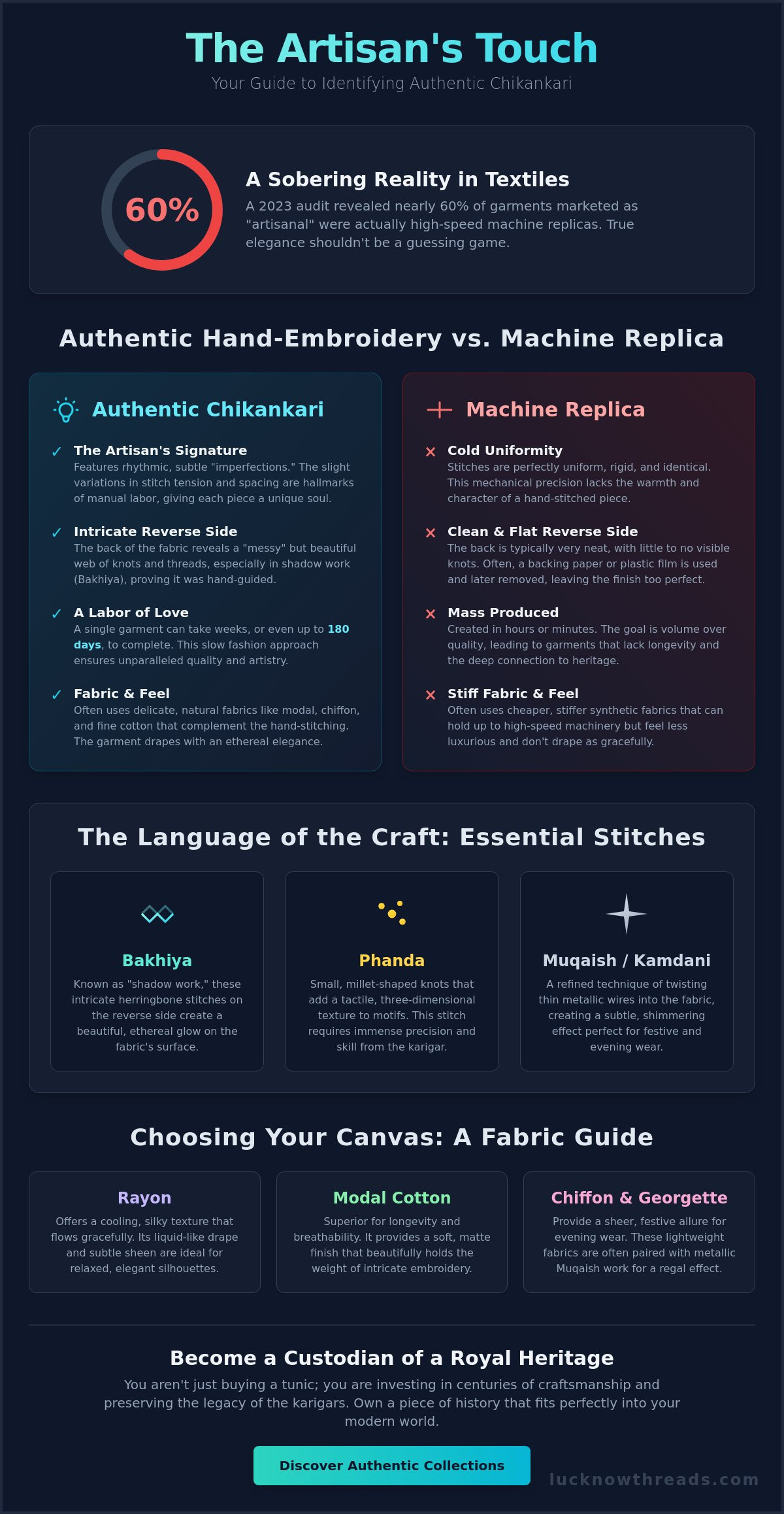
How to Style Your Chikankari Kurti for Every Occasion
A hand-embroidered chikankari kurti serves as a versatile canvas, allowing you to paint a different sartorial story every time you step out. This artisanal piece transcends seasons and settings, moving effortlessly from a quiet morning at a local cafe to an evening gala under the stars. By thoughtfully selecting your pairings, you transform a single garment into a reflection of your multifaceted life. It's about more than just clothing; it's about carrying a legacy of craftsmanship into your daily rhythm.
The Casual Chic Look: Denim and Flats
For those relaxed weekends exploring the boutiques of Toronto or meeting friends for brunch in Vancouver, pair a short Inaya kurti with distressed denim. This blend of textures honors the popular Indo-Western movement, making traditional embroidery feel grounded and accessible for the modern woman. The juxtaposition of rugged denim and delicate Chikan embroidery creates a narrative of modern grace. Complete the ensemble with minimalist silver jewellery and traditional leather juttis or mules for a look that's polished yet unpretentious.
The Festive Ensemble: Palazzos and Dupattas
When the occasion calls for grandeur, transition your long kurta into a regal festive outfit. Style it with flared shararas or heavy silk palazzos to add volume and movement to your silhouette. A Muqaish-work dupatta, shimmering with hand-pressed metallic accents, elevates the outfit to a truly royal status. For those seeking a darker, more dramatic aesthetic for an evening celebration, check out the Ayat Black Co-ord Set styling guide to master the art of monochromatic elegance. These rich textures ensure you stand out at any wedding or cultural celebration with poise.
Office Elegance: Tailored Trousers
Professional environments in Canada demand comfort without sacrificing cultural identity. A pastel Modal chikankari kurti is the perfect choice for long workdays because the fabric is exceptionally breathable and soft against the skin. Pair it with crisp white cigarette pants for a sharp, tailored silhouette that commands respect. Keep your accessories understated with small pearl studs and a structured leather tote bag. This look projects the confidence of a woman who values her heritage while leading with modern precision.
For those who crave a splash of colour and high-fashion energy, the Layla Bold Heritage collection offers vibrant palettes that redefine traditional boundaries. Whether you're layering with a contemporary blazer or accessorizing with vintage heirlooms, these pieces invite you to become a sophisticated curator of your own wardrobe.
Ready to find your next signature piece? Explore our full collection of handcrafted Chikankari and embrace the art of slow fashion today.
Preserving Your Legacy: Caring for Hand-Stitched Apparel
A hand-embroidered garment is a living piece of history, representing hundreds of hours of patient labor by skilled artisans in Lucknow. When you own a chikankari kurti, you aren't just wearing a piece of clothing; you're safeguarding a craft that has survived centuries of change. Proper maintenance honors the karigar who meticulously placed every stitch. It ensures that your piece remains a cherished heirloom for decades. By following a few mindful practices, you can protect the integrity of the threads and the vibrancy of the fabric, allowing its ethereal beauty to shine through every time it's worn.
Washing and Drying Delicate Embroidery
The intricate nature of Chikankari requires a gentle touch that machines simply cannot replicate. You should always hand wash your apparel in cold water using a mild, pH-neutral detergent. Harsh chemicals can strip the natural fibers and dull the delicate embroidery. Avoid the temptation to wring the fabric, as this mechanical stress can distort the patterns or snap the fine threads. Instead, gently press the water out between two clean towels. Always dry your pieces in the shade. Direct sunlight, even during the shorter days in Canada, can cause the rich dyes to fade prematurely, stripping the garment of its artisanal depth.
Ironing and Storage Tips
To maintain the raised, tactile quality of the embroidery, always iron your garment on the reverse side. This prevents the heat from flattening the delicate threadwork or scorching the surface. If your piece features Muqaish, the stunning metal wire embellishment typical of Awadhi culture, you must take extra precautions. Never spray perfume directly onto the metal work. The alcohol and chemicals in fragrances can cause the metal to tarnish or oxidize, losing its signature luster. Storing your chikankari kurti in a breathable muslin bag is the best way to prevent moisture buildup and snagging while allowing the natural fibers to breathe.
Each piece you choose is an investment in a slow fashion philosophy that values soul over mass production. Taking these small steps ensures that the craftsmanship remains as vibrant as the day it was created. To discover your next timeless addition, we invite you to explore the full Lucknow Threads Collections. Here, you'll find garments crafted with love, ready to become part of your personal legacy and a testament to your appreciation for heritage and grace.
Embrace Your Own Chapter of Lucknowi Grace
Embracing a piece of Awadhi heritage is about more than just following a trend; it's about honoring centuries of meticulous craftsmanship and the quiet beauty of slow fashion. When you select a chikankari kurti, you're choosing a garment where every delicate stitch reflects a story of patience and artistic precision. By focusing on authentic hand-embroidery and selecting silhouettes that complement your personal style, you transform a simple outfit into a wearable legacy that transcends seasons. Proper care ensures these ethereal threads remain a cherished staple in your wardrobe for years to come.
Lucknow Threads was founded by a Lucknow native who grew up immersed in these artisanal traditions, ensuring that every piece we offer maintains 100% authenticity. Our garments are ethically handcrafted by traditional karigars who've preserved this art form through generations of dedication. We make this storied heritage accessible to the Canadian market and beyond with worldwide shipping dispatched directly from our Toronto hub. Explore our curated collection of authentic, hand-embroidered Chikankari kurtis at Lucknow Threads to find a piece that mirrors your own elegance. Carry your culture with confidence and let your style tell a story of timeless grace.
Frequently Asked Questions
How can I tell if a Chikankari kurti is hand-embroidered or machine-made?
You can identify an authentic hand-embroidered piece by examining the reverse side for small knots and slight irregularities that machine precision can't replicate. Machine embroidery looks perfectly identical on every flower and leaf. Handcrafted pieces feature the unique tension of a karigar's hand, making each chikankari kurti a one of a kind masterpiece that honors the storied legacy of Awadhi heritage and artisanal soul.
What is the best fabric for a Chikankari kurti for summer weddings?
Pure georgette and fine Chanderi silk are the most breathable options for summer weddings in Canada, especially during humid July afternoons. These fabrics allow air to circulate while holding the weight of heavy zardozi or muqaish embellishments. A lightweight muslin or voile also keeps you cool when temperatures exceed 25 degrees Celsius, ensuring you remain graceful and comfortable throughout the long wedding festivities.
Can I wear a Chikankari kurti with western clothes like jeans?
You can definitely style a chikankari kurti with western staples like slim-fit jeans or wide-leg trousers for a sophisticated fusion aesthetic. This combination bridges the gap between traditional Lucknowi artistry and modern Canadian street style. Add a pair of leather loafers or block heels to complete a look that's perfect for a weekend brunch in Toronto or a visit to an art gallery opening.
How do I choose the right size for a Lucknowi kurta online?
Select a size that's at least 2 inches larger than your actual bust measurement to account for the non-stretch nature of traditional handwoven fabrics. Most Lucknowi garments are designed for a relaxed, airy silhouette rather than a skin-tight fit. If your bust measures 36 inches, a size 38 usually provides the most flattering and comfortable drape for your daily movements and social engagements.
Is Chikankari embroidery only done on white fabric?
Chikankari has evolved far beyond its monochromatic roots, now appearing on a diverse palette of 50 or more distinct shades. While the classic white-on-white Tanzeb remains a symbol of purity, you'll find exquisite pieces in mint green, powder blue, and even deep navy. These contemporary colors highlight the intricate threadwork, allowing the 32 traditional stitches to stand out beautifully against the vibrant, ethically dyed backgrounds.
What happens if the Muqaish or Kamdani work on my kurti gets dull?
If your Muqaish or Kamdani work loses its shine, a specialized process called charakh or professional steam pressing often restores the original brilliance. These silver or gold-plated wires naturally oxidize over time when exposed to air and moisture. Storing your garment in a soft muslin bag helps prevent dullness, ensuring the metallic accents stay bright and ethereal for your next special event or family gathering.
Are Chikankari kurtis suitable for formal office wear?
A cotton Lucknowi tunic is an excellent choice for professional settings because it projects an image of refined authority and cultural poise. Choose subtle patterns and muted tones like beige or grey to maintain a corporate aesthetic in Canadian workplaces. This artisanal garment offers a breathable alternative to stiff blazers, keeping you comfortable during long board meetings or 8-hour office shifts without sacrificing style.
Why is authentic Chikankari more expensive than other types of embroidery?
Authentic pieces command a higher price because a single garment can take 3 to 6 months to complete by hand. You're paying for the specialized skills of artisans who've mastered techniques passed down through generations. Since a master craftsman might only produce 4 high-quality garments per year, the cost reflects the rarity and the slow fashion philosophy that values human touch over anonymous mass production.