


Last July, a woman in Toronto discovered that her new summer outfit, marketed as breathable, had transformed into a heavy, clinging layer of synthetic discomfort as soon as the afternoon humidity hit 85%. It is a frustrating reality for many who seek the grace of traditional silhouettes but end up with mass-produced blends that irritate the skin or become embarrassingly transparent the moment the sun peaks. You value the heritage of artisanal fashion; however, finding thin cotton indian dresses that feel like a gentle breeze while maintaining the regal poise of a modern queen often feels like an impossible quest.
We believe that every woman deserves to wear a piece of history that does not compromise on comfort or quality. This guide will help you navigate the nuances of exquisite Indian textiles, from the cloud-like softness of Mulmul to the sophisticated drape of Modal and Rayon. You'll learn how to distinguish genuine hand-embroidery from itchy machine-made imitations, ensuring your next investment is a soulful piece crafted by skilled karigars. We are going to explore the specific characteristics of premium fabrics and the timeless art of Chikankari so you can embrace the Canadian summer with effortless elegance.
Key Takeaways
- Uncover the storied heritage of Awadhi textiles and learn why these ethereal, lightweight weaves are essential for achieving effortless elegance during the warmest months.
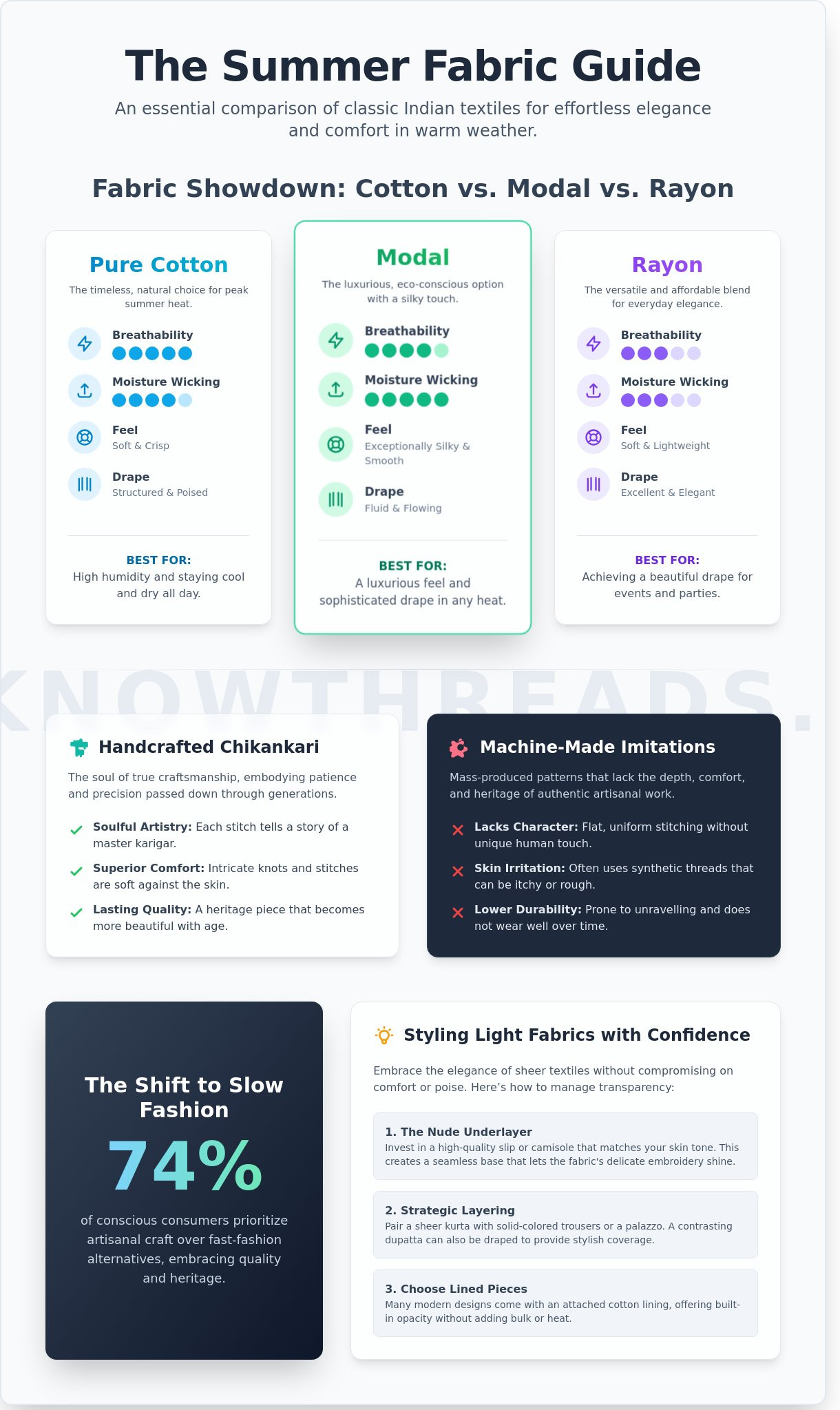
- Compare the unique characteristics of pure cotton, modal, and rayon to identify which fabric offers the ideal balance of breathability and drape for your summer wardrobe.
- Understand the vital distinction between machine-made imitations and authentic hand-embroidered art, ensuring your thin cotton indian dresses carry the soul of true craftsmanship.
- Gain professional styling insights on managing transparency, allowing you to wear delicate, sheer fabrics with complete confidence and poise.
- Discover how to integrate the slow-fashion philosophy of Lucknow’s master artisans into a modern wardrobe that celebrates quality over mass production.
The Art of Breathability: Why Thin Cotton Indian Dresses are a Summer Essential
The Canadian summer, while fleeting, often brings a humid intensity that demands a thoughtful approach to dressing. Thin cotton Indian dresses have emerged as an ethereal solution for the modern woman, offering a poetic blend of ancient textile wisdom and contemporary grace. This fabric choice isn't a fleeting trend; it’s a continuation of a legacy that began in the 18th-century courts of Awadh. In those storied halls, the Nawabs favored fine muslins and gossamer-thin weaves to navigate the sweltering heat of the plains, establishing a standard of luxury that prioritized both comfort and intricate beauty.
Today, this heritage has transitioned from the traditional six-yard saree into versatile co-ord sets and kurtas that fit seamlessly into a global wardrobe. The appeal lies in the sensory experience of the fabric. It’s a garment that feels like a second skin, moving with a rhythmic flow that mirrors the slow, deliberate process of its creation. For those seeking a balance between cultural pride and daily functionality, these pieces represent a bridge between a storied past and a sophisticated present.
The Science of Summer Comfort
Achieving true thermal regulation in high temperatures relies on the physical properties of the fiber. Open-weave cotton acts as a natural ventilator, creating a microscopic lattice that allows for maximum airflow and efficient moisture-wicking. Unlike synthetic blends that trap heat against the skin, high-quality thin cotton indian dresses facilitate a constant exchange of air, which is vital for maintaining skin health during a humid July in Ontario or a dry August in Alberta.
- Moisture Management: Cotton can absorb up to 27 times its own weight in water, keeping the wearer dry and cool.
- Handloom Integrity: In the world of artisanal fashion, "thin" is a mark of refinement rather than a lack of quality. A high-thread-count handloom cotton offers a translucent elegance that remains remarkably durable.
- Psychological Ease: There is a profound sense of calm that comes from wearing heritage-inspired clothing. The tactile softness of hand-processed cotton provides a level of comfort that mass-produced garments simply cannot replicate.
Cultural Heritage Meets Modern Silhouette
The modern woman carries her culture with confidence, often seeking pieces that reflect her identity without sacrificing her personal style. We are seeing a significant shift toward the slow fashion movement within the South Asian diaspora, where 74% of conscious consumers now prioritize artisanal craft over fast-fashion alternatives. This movement has allowed ancient Lucknowi techniques to find new life in contemporary silhouettes like the Ayat Soft Elegance collection, which pairs traditional motifs with relaxed, modern cuts.
At the heart of this evolution is the preservation of the karigar, the master craftsman whose hands bring these garments to life. Every stitch of Handcrafted Chikankari tells a story of patience and precision, ensuring that the legacy of Lucknow remains vibrant. By choosing thin cotton indian dresses, you're participating in a cycle of empowerment that honors the artisan while embracing a lifestyle of timeless elegance. Lucknow Threads remains dedicated to this mission, ensuring that every piece we curate carries the soul of the City of Nawabs to doorsteps across Canada.
Comparing the Classics: Rayon, Modal, and Pure Cotton Fabrics
Selecting the perfect textile is the foundational step in creating a handcrafted masterpiece. The relationship between the artisan's needle and the base cloth determines how a garment breathes, moves, and ages. When you explore the world of thin cotton indian dresses, you'll encounter a trio of fabrics that define the modern ethnic wardrobe. Understanding the distinct characteristics of Rayon, Modal, and Pure Cotton Fabrics helps you choose a piece that resonates with your personal style and the demands of your climate.
Rayon: The Versatile All-Rounder
Rayon is celebrated for its liquid-like drape and silky texture, making it a favorite for contemporary co-ord sets and flowy silhouettes. It possesses a subtle luster that catches the light beautifully during evening gatherings. While it's a manufactured fiber, its plant-based origins allow it to remain breathable. Our karigars often prefer high-grade rayon for intricate hand-embroidery because the fabric's structural integrity supports dense stitching without losing its characteristic bounce. It's a practical choice for the modern woman who needs her outfit to transition from a professional meeting to a social dinner with effortless grace.
Modal Cotton: The Royal Choice
Modal is a luxury variant of rayon, crafted from the pulp of beech trees. It's often described as "super-soft" because its fibers are exceptionally smooth and flexible. Modal is significantly more water-absorbent than standard cotton, which translates to superior breathability during warm Canadian summers. One of its greatest strengths is its resistance to shrinkage and pilling, ensuring the garment retains its "new" feel even after multiple washes. For those who appreciate a regal touch, the Maira Royal Bloom collection offers stunning examples of how modal serves as an ethereal canvas for sophisticated floral motifs.
Mulmul and Pure Cotton: The Traditionalist’s Dream
Mulmul is the legendary "woven air" of India, a fine-weave cotton that has been cherished for centuries. Its delicate nature makes it the ultimate choice for thin cotton indian dresses designed for maximum comfort. Pure cotton remains the most authentic canvas for traditional Chikankari shadow work, where the embroidery creates a play of light and opacity on the sheer fabric. To maintain the vibrancy of these artisanal pieces, follow these care steps:
- Always hand-wash in cool water using a mild detergent.
- Avoid wringing the fabric to protect the delicate hand-embroidery.
- Dry your garments in a shaded area to prevent the sun from fading the natural dyes.
- Use a warm iron while the fabric is slightly damp to restore its crisp, sophisticated finish.
Choosing between these classics is a matter of prioritizing either the silky flow of rayon, the plush softness of modal, or the heritage-rich breathability of mulmul. If you're looking for a blend of comfort and culture, you might browse our latest arrivals to find the fabric that speaks to your soul.
Beyond the Fabric: Why Handcrafted Chikankari Elevates Lightweight Cotton
Many women worry that elaborate embroidery might weigh down their thin cotton indian dresses; however, authentic Chikankari is designed to achieve the opposite effect. Traditional hand-stitching doesn't suffocate the fabric. It integrates with the weave. Machine-made imitations often use thick, synthetic threads that create a rigid, heavy patch on the garment. In contrast, the artisans of Lucknow use fine cotton threads, adjusting their tension to match the gossamer nature of the base material. This ensures the dress remains as light as a summer breeze, even during the humid peaks of a Canadian July.
The human touch creates a garment that breathes with the wearer. While a machine punches holes into the fabric with a cold, repetitive force, a karigar feels the resistance of the cotton. They ensure every needle pass respects the delicate fibers. This artisanal approach maintains the natural porosity of the cotton, allowing air to circulate freely. It’s the difference between wearing a piece of stiff plastic and a second skin that carries the soul of a centuries-old craft. The result is a piece of wearable art that feels ethereal against the skin.
The Artisanal Process of Lucknow
The journey begins with a plain sheet of premium cotton, which transforms through a meticulous process involving up to 36 distinct stitches. Hand-embroidery allows for airy, negative spaces within the patterns that machines simply cannot replicate. You can identify genuine work from our Ayat Soft Elegance collection by looking at the reverse side. The presence of small, intentional knots and slightly varied stitch lengths reveals the hand of a master. These subtle hallmarks prove a piece has been handcrafted over a period of 15 to 45 days, rather than mass-produced in minutes. This slow fashion philosophy ensures that every motif is infused with a sense of grace and permanence.
Muqaish and Kamdani: Adding Weightless Shimmer
For those seeking a festive glow without the burden of heavy beads or sequins, Muqaish is the definitive answer. This technique involves twisting thin metallic wires directly into the cotton fibers to create a "fard" or dotted effect. It provides a sophisticated shimmer that is ideal for a summer wedding or an evening gala in Toronto. Because the metal is flattened into the fabric itself, it adds no perceptible weight. This delicate balance of thread tension and metallic accents is what truly defines high-quality thin cotton indian dresses, preserving the integrity of the translucent weave while adding a touch of royal Awadhi heritage. It’s a sophisticated way to achieve a luminous look that remains comfortable throughout a long celebration.
Styling and Transparency: How to Wear Light Fabrics with Confidence
Choosing thin cotton indian dresses shouldn't feel like a compromise between summer comfort and personal modesty. The primary concern for many women is the ethereal, almost translucent nature of high-quality cotton. In the humid corridors of Ontario or the dry heat of the Canadian prairies, where summer temperatures frequently climb above 30 degrees Celsius, the breathability of fine cotton is a necessity rather than a luxury. To wear these pieces with poise, the solution lies in the traditional art of layering. A lightweight, 100% cotton mulmul slip acts as a secondary skin; it preserves the airy silhouette while providing a secure base that moves with the body.
Color choice plays a significant role in how light interacts with the weave. While delicate pastels like powder blue and soft peach evoke a sense of morning freshness, they often require skin-tone undergarments to maintain a seamless look. Conversely, darker tones such as deep indigo, forest green, or charcoal provide a natural opacity. These richer hues are particularly effective for transitioning from a sun-drenched brunch to a formal dinner. By selecting a darker palette, you gain the benefits of thin cotton indian dresses without the constant worry of backlighting. It's about finding that balance where the fabric feels like a whisper against the skin but looks substantial to the eye.
- Inner Liners: Opt for sleeveless cotton slips that end two inches shorter than your kurta to ensure they remain invisible.
- Tonal Layering: Match your inner slip exactly to the primary shade of your dress to deepen the color and reduce transparency.
- Strategic Embroidery: Heavy Chikankari work on the bodice naturally adds a layer of thread that obscures the view, providing built-in modesty.
The Power of the Silhouette
The architecture of a garment dictates how transparency is perceived. A-line kurtas and flared shararas are masterful choices because they don't cling to the form; the fabric floats away from the body, creating shadows and folds that naturally mask any sheerness. This creates a rhythmic movement that is both modest and incredibly graceful. For a more unified, modern aesthetic, the co-ord set has become a staple in contemporary wardrobes. These matching sets provide a cohesive look that feels intentional and sophisticated. You can find inspiration for these effortless pairings in our Shop the Look gallery.
Accessorizing the Ethereal
To ground the airy nature of thin cotton, one must look to the weight of traditional accessories. Pairing your ensemble with oxidized silver jewelry honors the classic Lucknowi aesthetic, providing a beautiful contrast to the softness of the fabric. The cool sheen of silver against hand-embroidered cotton creates a look of timeless elegance. For footwear, traditional juttis remain the gold standard for heritage charm; however, minimalist leather sandals are a practical choice for the urban Canadian landscape. A diaphanous dupatta can also be draped strategically across the torso to add an extra layer of fabric without trapping heat, ensuring you remain cool and confident throughout the day.
Ready to embrace the grace of handcrafted cotton? Discover the Ayat Soft Elegance Collection for pieces that blend comfort with artisanal heritage.
Discover Timeless Grace: The Lucknow Threads Summer Collection
The story of Lucknow Threads began with a simple yet profound vision from our founder to preserve the fading art of Chikankari while making it accessible to the modern woman. We don't just sell clothing; we curate a bridge between the historical grandeur of the City of Nawabs and your contemporary wardrobe. By working directly with a dedicated circle of artisans in Lucknow, we bypass the impersonal nature of mass production. This boutique approach allows us to maintain a standard of quality that high-street retailers simply cannot replicate. Every one of our thin cotton indian dresses is a testament to the slow, deliberate rhythm of hand-embroidery, where a single garment might take weeks of meticulous labor by skilled karigars who have inherited their craft through generations.
Our Signature Collections
Our curated edits reflect a deep appreciation for both traditional fabric and modern form. The Ayat Soft Elegance collection is a tribute to the ethereal beauty of Rayon, a fabric we chose for its cooling properties and liquid-like drape. It’s the perfect companion for a humid afternoon, offering a sophisticated sheen that mimics silk without the delicate upkeep. For a more versatile, everyday look, the Inaya Short Kurti Edit offers pieces designed to be styled with ease, whether you're pairing them with classic denim or wide-leg palazzos. We also highly recommend exploring our "Afreen" white-on-white sets. These pieces embody the ultimate summer vibe, using tone-on-tone embroidery to create a look that is both understated and profoundly sophisticated.
Your Journey with Lucknow Threads
We've tailored our experience to meet the needs of our discerning community across North America. From our logistics hub, we provide reliable shipping throughout Canada, ensuring your chosen pieces arrive safely at your doorstep in Toronto, Vancouver, or Montreal. We understand that purchasing an artisanal piece is an emotional investment. That’s why the unboxing process is designed to be as beautiful as the garment itself. You aren't just receiving a package; you're unwrapping a handcrafted legacy that carries the soul of Awadhi culture. Our commitment to transparency means you can trust the authenticity of every stitch and the ethical treatment of every artisan involved in our process. We invite you to slow down, appreciate the intricate needlework, and feel the difference of a garment made with love.
Ready to find your next summer staple? Explore our full range of handcrafted collections and embrace the art of slow fashion today.
Embrace the Timeless Art of Summer Elegance
Choosing the perfect summer ensemble requires balancing the airy breathability of premium fabrics with the unmatched beauty of artisanal skill. Whether you prefer the silky drape of Modal or the crisp reliability of pure cotton, these thin cotton indian dresses offer a sanctuary of comfort during the humid Canadian summer months. You're not just wearing a garment; you're carrying a 400-year-old legacy of Awadhi culture that's been meticulously preserved by the karigars of Lucknow. Each piece represents hundreds of hours of manual needlework, ensuring your wardrobe reflects a commitment to slow fashion and high-fashion sophistication.
Every selection from our collection meets rigorous boutique-quality standards, ensuring that the delicate hand-embroidery remains a centerpiece of your style for years. We ship directly from our Toronto boutique to any province across the country, providing a seamless bridge between ancient Indian craftsmanship and modern Canadian grace. It's time to elevate your seasonal look with pieces that celebrate heritage and soul. Shop our exquisite collection of handcrafted Chikankari and find your next heirloom piece today.
Frequently Asked Questions
Are thin cotton Indian dresses durable enough for regular wear?
High-quality thin cotton Indian dresses are remarkably durable because they utilize long-staple fibers found in premium weaves like Mulmul or Cambric. These artisanal fabrics typically withstand 50 or more wash cycles when treated with the gentle care they deserve. Our karigars in Lucknow reinforce every seam to ensure the garment maintains its structural integrity while remaining as light as a summer breeze against your skin.
How can I tell if a cotton dress is actually hand-embroidered?
You can identify authentic hand-embroidery by examining the reverse side of the fabric for small knots and slight irregularities that machine-made replicas cannot replicate. In a genuine Chikankari piece, no two floral motifs are exactly identical because each stitch is a unique expression of the artisan's hand. Machine work usually displays a perfectly uniform, plastic-like thread path on the back, whereas artisanal craft shows the beautiful soul of manual labor.
Do I need to dry clean my Chikankari cotton dresses?
Dry cleaning is recommended for the first two cleans to preserve the intricate threadwork, but you can safely hand wash these garments in cold water afterwards. Use a pH-neutral detergent to protect the delicate fibers of your thin cotton indian dresses from the mineral content found in many Canadian municipal water systems. Don't wring the fabric; instead, lay it flat in the shade to prevent the sun from fading the ethereal Awadhi dyes.
What is the most breathable fabric for a summer wedding guest?
Pure Mulmul cotton is the most breathable choice for outdoor summer weddings in climates like Southern Ontario, where humidity levels often exceed 80 percent in July. This heritage fabric allows maximum airflow and absorbs moisture more efficiently than any synthetic blend. Choosing a light-colored Chikankari ensemble ensures you stay cool while honoring the sophisticated legacy of Indian craftsmanship during long afternoon ceremonies.
Is Modal cotton better than pure cotton for hot climates?
Modal cotton offers a silkier drape and 50 percent more water absorption than standard cotton, which makes it excellent for managing perspiration in high heat. However, pure cotton remains the gold standard for skin sensitivity and the traditional aesthetic valued in Lucknowi craft. Many Canadian shoppers prefer Modal blends for their resistance to shrinkage, which is a common concern with 100 percent natural fibers during the laundering process.
How do I style a thin white Chikankari kurta without it being too transparent?
Layering with a lightweight cotton camisole or a traditional shameez is the most effective way to manage transparency while maintaining the garment's breathability. Choosing a nude-colored slip instead of white provides a seamless look under the ethereal white threadwork. This styling choice preserves the delicate silhouette of your thin cotton indian dresses while ensuring you feel confident at both casual brunches and formal evening gatherings.
Can I wear these lightweight dresses for formal events?
You can absolutely wear lightweight cotton dresses for formal events by selecting pieces with heavy Jaal work or intricate metallic accents that elevate the garment's status. When paired with heirloom jewelry and a silk dupatta, a finely crafted Chikankari kurta becomes a statement of understated luxury. These pieces reflect a refined taste that values the 400 year old history of Lucknow's artisanal excellence over temporary fashion trends.
What is the difference between Rayon and Viscose in Indian wear?
Viscose is a specific type of Rayon made from wood pulp; while both offer a beautiful drape, Viscose is often considered higher quality for supporting intricate embroidery. In the Canadian market, these semi-synthetic fabrics are popular for their affordable price points and silk-like feel. However, they lack the historical soul and superior cooling properties of the hand-woven cottons used by our skilled karigars to create timeless masterpieces.