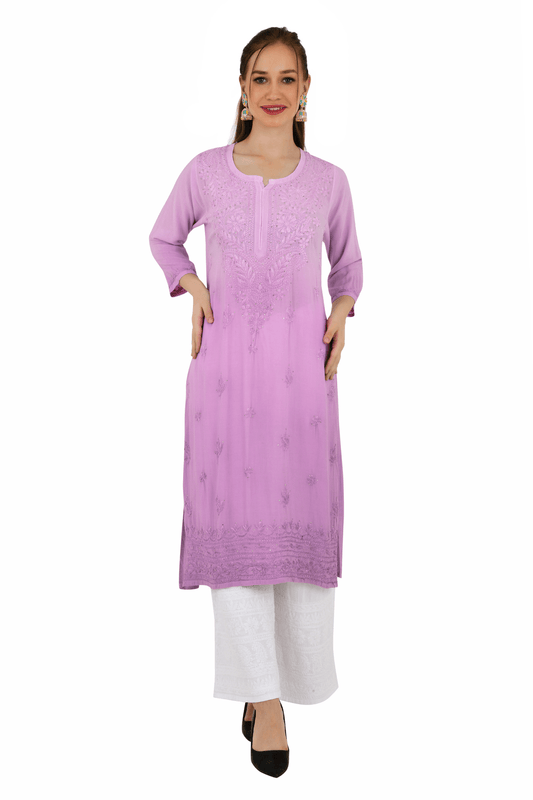
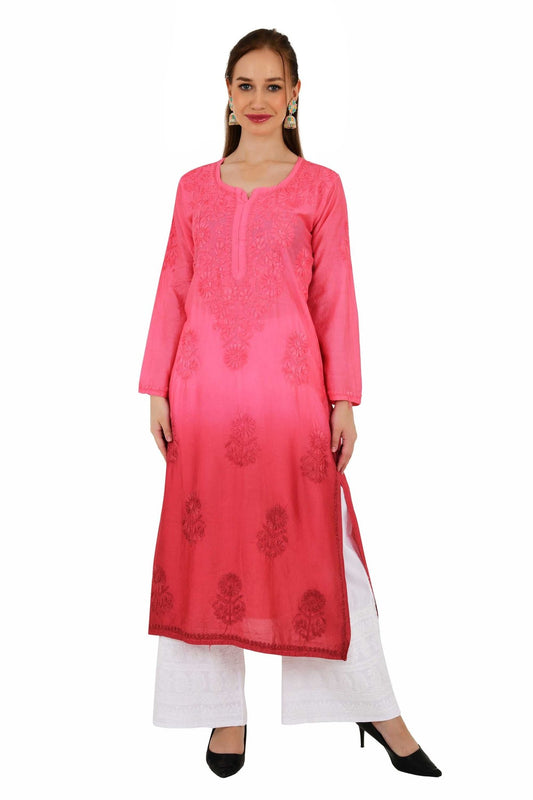
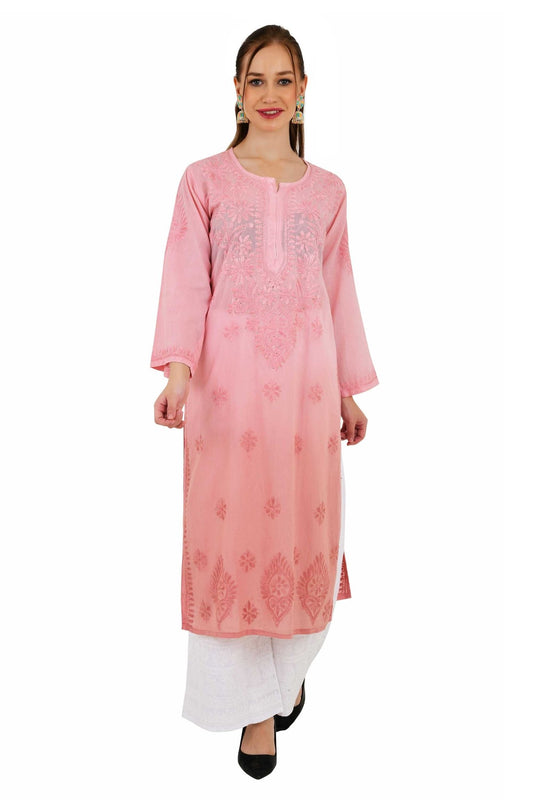
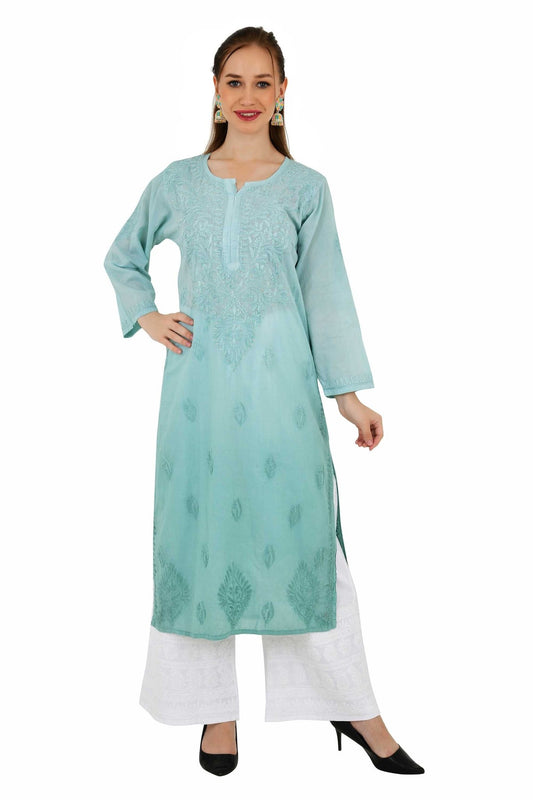
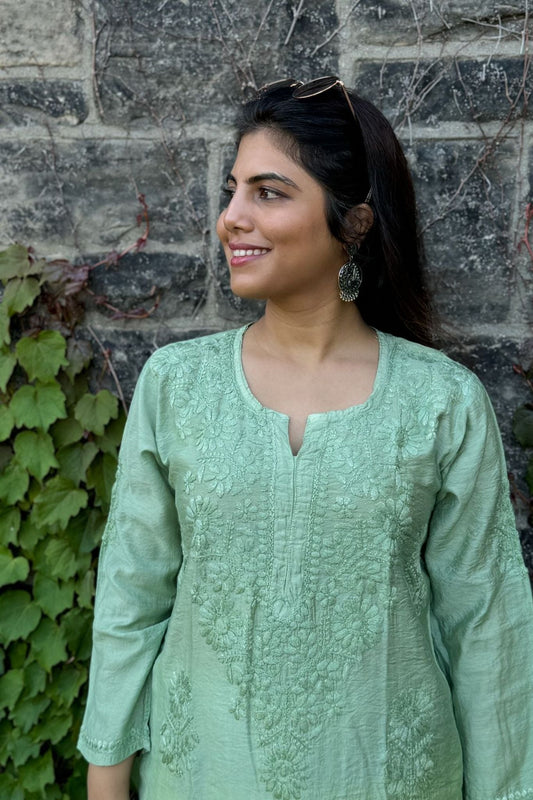
You know the feeling. You open five tabs looking for something elegant to wear, and every option starts blending into the same cycle of trend-led fabric, vague product photos, and descriptions that say almost nothing about how a garment was made. It looks polished on screen, but it rarely feels meaningful once it arrives.
That’s where chikan embroidery kurtis stand apart. A good one doesn’t rely on noise. It has quiet detail, breathable fabric, and a kind of finish that comes from time, not speed. It can move from a workday to dinner, from a summer afternoon to a festive gathering, without feeling costume-like or overly precious.
For many women in Canada and the USA, that balance is the hard part. You want heritage, but you also want ease. You want something rooted in craft, but you need it to work with real life, real weather, and a modern wardrobe. Authentic Chikankari does that beautifully when you know what you’re looking at, how to wear it, and how to care for it.
Table of Contents
- The Search for Timeless Elegance
- From Mughal Courts to Modern Closets The Story of Chikankari
- The Artisan's Hand Understanding Stitches and Fabrics
- Authentic vs Imitation How to Spot Real Lucknowi Craftsmanship
- Finding Your Perfect Fit A Guide to Silhouettes and Sizing
- Styling Your Chikankari Kurti From Work to Weekend
- Preserving the Embroidery A Guide to Care and Maintenance
- Where to Buy Authentic Chikankari and Your Questions Answered
The Search for Timeless Elegance
Fast fashion has trained shoppers to expect speed, not substance. You can get a garment delivered quickly, but that doesn’t mean it will drape well, breathe properly, or still feel special after a few wears. Most of the frustration around online shopping comes from that gap between appearance and reality.
Chikan embroidery kurtis answer a different need. They don’t chase attention with heavy embellishment or synthetic shine. Their beauty comes from restraint, texture, and handwork that reveals itself slowly. That’s why they appeal to women who are tired of buying clothes that look finished online but feel disposable in person.
Its attraction isn’t nostalgia. It’s practicality with soul. A well-made Chikankari kurti can sit comfortably in a modern wardrobe because it does several jobs at once. It’s polished enough for a meeting, soft enough for daily wear, and expressive enough to feel distinct without trying too hard.
Why they feel different from trend pieces
Some garments ask your whole wardrobe to revolve around them. Chikankari doesn’t. It works with well-fitting trousers, denim, fluid pants, or a simple dupatta. It gives you detail without making styling complicated.
Practical rule: If a kurti only works for one occasion, it’s harder to justify. If it moves easily between weekday and weekend, you’ll reach for it far more often.
There’s also an emotional difference. When you wear something handmade, you notice it. The surface has life. The motifs don’t feel sterile. The piece carries the patience of human hands, and that changes how you experience getting dressed.
For women building a smaller, better wardrobe, that matters. You stop shopping for volume and start shopping for pieces that have understated appeal, wear comfortably, and still feel relevant months later.
From Mughal Courts to Modern Closets The Story of Chikankari
Chikankari didn’t begin as casual fashion. It entered Lucknow as courtly dress, refined, detailed, and closely tied to elite taste. According to the historical account from House of Chikankari’s history of Lucknow Chikankari, Chikankari embroidery originated in the Mughal era around the early 17th century, introduced by Empress Noor Jahan, wife of Emperor Jahangir. That association matters because it explains why the craft has always carried a sense of softness and sophistication rather than visual excess.

A royal beginning
The earliest Chikankari aesthetic was known for white-on-white embroidery on light fabrics such as mulmul and cotton. Floral motifs, paisleys, and geometric forms fit naturally with Mughal taste, and stitches like taipchi, bakhia, and jhali helped create the airy, nuanced finish that still defines the craft today.
By the time Awadh nawabs supported the art in the 18th and 19th centuries, the craft had become even more specialised. Historical accounts describe over 30 specialised stitches, each requiring control and consistency from skilled karigars. That level of labour is one reason authentic pieces feel different from factory embroidery. Even before you understand the technique, you can often sense the difference in how the surface sits on the cloth.
For readers who want a broader heritage lens, this heritage guide to Lucknow Chikankari work gives useful context around why the craft remains so visually distinctive.
How the craft survived
Chikankari didn’t move through history untouched. British colonisation pushed mass-produced textiles into the market, and revival histories describe a severe decline in artisan clusters. Yet the craft didn’t disappear. Women in local communities kept the skills alive through practice, repetition, and family transmission.
That continuity shaped modern Chikankari more than people realise. What survives today survives because artisans kept choosing handwork when industrial production made that choice harder.
Some garments inherit a style. Chikankari inherited a struggle for survival, which is part of why authenticity matters so much.
Post-independence revival efforts helped rebuild networks of artisans, cooperatives, and designers. A major milestone came in 2008, when “Lucknawi Chikankari” received a Geographical Indication tag, legally protecting the craft’s regional identity. The same historical source notes that this recognition supports over 10,000 artisans in Lucknow clusters. When you buy an authentic piece, you’re not buying a generic embroidery trend. You’re buying into a living textile tradition with a traceable place, community, and history.
The Artisan's Hand Understanding Stitches and Fabrics
A good Chikankari kurti should reward a close look.
Many shoppers in Canada and the USA see a pretty embroidered kurti online, zoom in, and still cannot tell why one piece feels refined while another feels generic. The answer usually comes down to two decisions made long before the garment reaches your wardrobe. The stitch selection, and the fabric chosen to carry it. Learn those two, and you can judge quality with far more confidence.
What the stitches do
Chikankari is not one visual effect. It is a family of hand techniques, each used for a different result on the surface of the cloth. Some stitches build outline. Some create shadow. Some add a slight raised texture that catches light without looking heavy.
A few names are worth knowing because they change how a kurti looks and wears:
- Tepchi creates a light running line that guides floral and geometric motifs.
- Bakhiya gives the classic shadow-work effect. This is one of the details people often notice first, even if they do not know the name.
- Phanda adds tiny knot-like dots that bring texture into petals and small accents.
- Murri forms fine grain-shaped details and works well in delicate motifs.
- Jaali creates an open, netted effect that feels airy and intricate when done by a skilled artisan.
These stitches should not all shout at once. Good Chikankari has balance. The surface feels soft, detailed, and slightly varied because a hand made it, not because someone forced extra ornament onto the fabric.
If you want a visual companion while reading product pages, our guide to what Chikankari embroidery is and how its stitches are used helps connect stitch names to the finish you see on the garment.
Why fabric choice changes everything
Even beautiful embroidery can disappoint if the base fabric is wrong for your climate, routine, or styling habits. Consequently, many online purchases prove disappointing. A kurti may look graceful in a flat photo, then arrive too sheer for daily wear, too stiff for layering, or too delicate for a cold-weather wardrobe that depends on coats, indoor heating, and frequent washing.
For real North American use, fabric matters as much as design.
Modal cotton is often the easiest choice for long workdays. It feels breathable, sits neatly under a cardigan or blazer, and usually gives enough structure to keep the embroidery looking tidy instead of limp. In Canadian summers, or during overheated indoor winters, that breathability matters more than people expect.
Rayon offers a softer drape and a more fluid silhouette. It works well in straight cuts and easy A-line kurtis, especially if you want the embroidery to read as refined rather than formal. The trade-off is that rayon can need a bit more care to keep its shape looking fresh.
Lighter fabrics have their place too. They are lovely for festive wear, summer gatherings, or layered styling with a slip, tapered trousers, and a light dupatta. But for one kurti that has to handle office hours, errands, dinner out, and repeat wear, a slightly more substantial breathable fabric is often the smarter buy.
At Lucknow Threads, this is one of the first filters worth using when choosing a piece. Start with your life, not just the product photo. If you commute, layer for changing temperatures, or want a kurti that works from weekday meetings to weekend lunch, choose fabric with enough body to support the embroidery and enough comfort to keep wearing it.
That balance is what makes Chikankari feel current. It stays rooted in craft, but it lives well in a modern wardrobe.
Authentic vs Imitation How to Spot Real Lucknowi Craftsmanship
A shopper in Toronto orders a “handmade Lucknowi kurti” for summer, opens the parcel, and finds scratchy thread, shiny fabric, and embroidery so stiff it sits on the surface like a patch. I hear versions of that story often. The problem is not that Chikankari is delicate or old-fashioned. The problem is that imitation work borrows the look without the hand, patience, or finish that make the craft worth wearing.

What authenticity looks like in your hands
Real Chikankari rarely feels loud. It feels settled into the cloth. The stitches sit with the fabric instead of fighting it, and the pattern has a softness that machine-made pieces usually miss.
Look closely and you should see small human variation. A leaf motif may shift slightly from one side to the other. A jaali section may show minute irregularity. Good handwork is still controlled, but it does not have the frozen sameness of factory repetition.
The back matters too. Many shoppers only study the front photo and miss the clearest clue. On authentic work, the reverse side usually shows disciplined stitching with a hand-finished logic to it. On imitation pieces, the back often looks dense, messy, or mechanically repetitive, especially around florals and borders.
A few practical checks help:
- Touch the thread, if possible: hand embroidery usually feels softer and more flexible, not wiry or plastic-like.
- Check motif repetition: exact copies across the entire garment often point to machine production.
- Study the fabric and embroidery together: authentic Chikankari looks like it belongs on that base cloth. Cheap imitations often pair generic motifs with fabric chosen only to hit a price point.
- Ask for close-ups of the front and back: a seller who knows the craft should be able to show both without hesitation.
Buyer’s check: If a kurti looks ornate in the main image but every close-up feels stiff, overly dense, or suspiciously identical, pause before buying.
A quick comparison before you buy
| Feature | Authentic Hand-Embroidered (e.g., Lucknow Threads) | Machine-Made Imitation |
|---|---|---|
| Time and labour | Built slowly by artisans, with visible hand control | Produced quickly through repeatable machine patterns |
| Surface texture | Soft, dimensional, and gently varied | Flat, hard, or overly uniform |
| Back side appearance | Shows careful handwork and thoughtful finishing | Often reveals repetitive stitching and less refined finishing |
| Motifs | Traditional forms with natural variation | Identical repeated motifs with little character |
| Wear over time | Holds its grace better with proper washing and storage | More likely to fray, stiffen, or lose definition |
| Overall feel | Breathable, tactile, and refined up close | Decorative from a distance, less convincing in person |
One common buying mistake is equating heavier embroidery with better quality. Dense thread can hide weak design and rushed production. Fine Chikankari often looks lighter, clearer, and more balanced. That restraint is part of its beauty, especially if you want a kurti that works in real North American life under a cardigan, with fitted pants, or through repeated wear in heated indoor spaces.
That is why trusted sourcing matters. A thoughtful retailer should tell you what fabric was used, show the embroidery clearly, and explain whether the piece is hand embroidered or machine finished. At Lucknow Threads, that level of detail is part of the point. Shoppers in Canada and the USA need more than a flattering product photo. They need enough information to judge whether the kurti will still feel beautiful after delivery, after styling, and after living in a real wardrobe.
Finding Your Perfect Fit A Guide to Silhouettes and Sizing
Fit matters just as much as craftsmanship. Even a beautifully embroidered kurti won’t get worn if the cut fights your body or your routine. The good news is that chikan embroidery kurtis come in shapes that can feel very current when chosen with intention.

Choosing a silhouette that works for your life
A straight-cut kurti is usually the easiest starting point. It gives a clean line, pairs well with cigarette pants or structured trousers, and works especially well when the embroidery sits on the yoke, sleeves, or hem. If your style leans minimal, this is often the most versatile option.
An A-line shape offers more movement and can feel softer through the hips. It’s useful if you want ease without looking oversized. It also suits rayon beautifully because the drape helps the flare sit naturally instead of looking stiff.
A short kurti can feel especially modern. Worn with denim, wide-leg trousers, or even a monochrome co-ord bottom, it reads less traditional and more integrated into a North American wardrobe. This is often the silhouette people reach for when they want heritage detail without a more formal mood.
Sizing without guesswork
Online sizing becomes simpler when you stop thinking in generic small-medium-large terms and focus on the intended fit.
- For a polished office look: Choose a size that skims, not clings. The embroidery should sit flat without pulling.
- For casual wear: A relaxed fit gives the fabric and stitchwork room to move.
- For layered styling: Leave enough space if you plan to wear the kurti over straight pants, with a jacket, or with a dupatta.
The shoulder and bust usually matter more than the waist in kurtis. If the shoulder sits wrong, the whole piece looks off, no matter how pretty the embroidery is. Sleeve comfort matters too. Handworked sleeves should never feel strained because tension distorts the surface detail.
A flattering fit doesn’t mean a tight fit. With Chikankari, a little breathing room often makes the embroidery look better, not worse.
If you’re between sizes, think about how you want to wear it. Someone buying for office dressing may prefer cleaner structure. Someone buying for brunches, travel, or everyday comfort may enjoy a softer silhouette with more ease through the body.
Styling Your Chikankari Kurti From Work to Weekend
The smartest way to buy a Chikankari piece is to imagine at least three places you’d wear it. If you can only see it at one family event, it’s probably not the right everyday investment. The beauty of a well-cut kurti is that styling changes the mood quickly.

For the office
A white, ivory, powder blue, or muted pastel kurti can work beautifully for professional dressing. The trick is contrast. Pair a softly embroidered kurti with crisp straight trousers, a structured tote, and simple earrings. Keep the rest of the look clean so the stitchwork carries the outfit.
If you like styling references that translate heritage dressing into weekday outfits, this guide on how to style Chikankari kurtis for a modern workday without compromising comfort is useful because it focuses on wearable combinations rather than occasion-only dressing.
A practical note from boutique experience: when the embroidery is concentrated around the neckline or front panel, keep jewellery lighter. When the kurti is more minimal, you can add a statement cuff or longer earrings without crowding the look.
For weekends and dinners
Weekend styling is where a short or straight kurti really proves itself. A white or soft-toned piece with dark denim, flat sandals, and a crossbody bag feels effortless. For cooler weather, add a long neutral coat and let the hem and cuffs peek through. That mix works especially well in Canadian and US cities where layering is part of daily dressing.
For dinner, switch the balance. Replace denim with fluid trousers or slim cigarette pants, add heeled sandals or elegant flats, and bring in one richer accessory such as a metallic clutch or a chiffon dupatta. The embroidery will still do most of the talking.
A quick visual helps if you’re deciding how much styling changes the mood of one piece.
You don’t need to style Chikankari in a fully traditional way for it to feel respectful. In fact, many of the strongest modern looks come from letting the kurti be the crafted element and keeping everything else pared back.
Here are combinations that tend to work reliably:
- Workday pairing: Straight kurti, ankle trousers, loafers or low heels, clean tote.
- Brunch look: Short kurti, denim, flats, sunglasses, simple hoops.
- Festive but restrained: Longer kurti, tonal pants, delicate dupatta, refined jewellery.
- Travel outfit: Relaxed kurti, soft pants, comfortable sandals, light layering piece.
The through-line is balance. If the embroidery is intricate, simplify the silhouette. If the cut is minimal, you can add a little more accessory interest. That’s what keeps Chikankari looking current instead of overstyled.
Preserving the Embroidery A Guide to Care and Maintenance
A Chikankari kurti can look pristine on delivery day and tired after three washes if it is treated like a basic cotton top. I see this often with customers in Canada and the northern US, where hard water, indoor heating, heavy winter storage, and quick dryer cycles are part of everyday life. The embroidery is delicate, but the routine does not need to be complicated.
One retailer note from Nazrana Chikan’s care page points to a concern many shoppers already suspect. Garments sold as Chikankari are often cared for incorrectly, and many pieces in the market may be imitation work rather than true Lucknowi hand embroidery. That matters because authentic hand stitches and mass-produced machine embroidery do not respond the same way to washing, drying, or ironing. If you are still comparing sellers, this guide on how to choose an authentic Lucknowi hand embroidery online shop in 2026 helps you judge what you are buying before care even becomes an issue.
Start with the gentlest method first. Cold water, mild liquid detergent, and light hand movement are usually enough.
Pay attention to the fabric as much as the embroidery. Cotton and mulmul can soften beautifully with proper washing, while rayon blends may need a little more support when wet because they become heavier and more prone to stretching. Scrubbing the stitched area is the mistake that causes trouble fastest. Clean sweat-prone areas such as the neckline, cuffs, and underarms with your fingertips, then let the rinse do the rest.
A few habits make a visible difference over time:
- Wash in cold water: This helps the fabric hold its shape and keeps the threadwork from loosening.
- Do not soak for long periods: Extended soaking can weaken finer threads and affect dye consistency.
- Never wring the garment: Press water out between your hands or in a towel.
- Rinse until the water runs clear: Leftover detergent can leave fabric stiff and dull.
- Handle wet kurtis with support: Lift from the body of the garment, not from one embroidered panel.
Drying is where many good pieces lose their grace. A machine dryer can shrink the base fabric, roughen the threads, and pull the kurti out of shape. Lay it flat on a clean towel if the embroidery is dense, or hang it in shade if the fabric is lightweight and evenly balanced. Direct sun for too long can make whites look harsh and can fade dyed pieces unevenly.
Storage deserves more attention in North American homes, especially in places with sharp seasonal changes. In winter, overheated closets can dry out natural fabrics. In humid summers, packed wardrobes can trap moisture. Store your kurti clean, fully dry, and with breathing room around it. Avoid wire hangers for heavier pieces. A padded hanger or careful folding with tissue between embroidered sections works better.
Iron from the reverse side on low heat. If the kurti needs more polish, place a thin cotton cloth over it and press, rather than dragging the iron across raised stitches.
Good Chikankari does not demand fussy care. It asks for calm handling and a little consistency. That is one reason many of us who work closely with the craft prefer buying fewer, better pieces from thoughtful boutiques such as Lucknow Threads. A well-made kurti can stay in regular rotation for years if you wash gently, skip the dryer, and store it with care.
Where to Buy Authentic Chikankari and Your Questions Answered
A trustworthy Chikankari retailer should make authenticity easier to verify, not harder. That means clear product photography, close-up views of embroidery, honest fabric information, and details about where the work is done. If the listing feels vague, the garment usually is too.
What to look for in a retailer
Look for stores that treat the garment as craft, not just trend. They should explain the silhouette, the fabric, and the embroidery in practical terms. They should also show enough visual detail for you to inspect the piece before ordering.
One option in this space is Lucknow Threads, a boutique focused on authentic Lucknowi Chikankari for modern wardrobes, with collections in breathable fabrics such as rayon and modal cotton and silhouettes designed for work-to-weekend wear. If you’re comparing shops, this guide on how to choose an authentic Lucknowi hand embroidery online shop in 2026 is a useful checklist for what transparency should look like.
Common questions
Is real Chikankari expensive?
It can cost more than mass-market embroidery because handwork takes time. The better question is whether the piece offers enough craftsmanship, fabric quality, and wearability to justify the price.
Can I wear Chikankari casually?
Absolutely. In fact, that’s where many women get the most value from it. A short or straight kurti with denim or simple trousers feels natural, not formal.
Should every authentic piece look perfectly identical?
No. Slight variation is often part of the beauty. Human hands create rhythm, not copy-paste repetition.
Is white the only classic option?
White and tonal neutrals remain iconic, but modern wardrobes can carry Chikankari beautifully in muted colours and deeper shades too.
What matters more, fabric or embroidery?
They matter together. Beautiful handwork on an uncomfortable base won’t become a favourite piece. The best kurtis get both right.
If you’ve been looking for clothing that feels elegant, breathable, and rooted in real craft, explore Lucknow Threads. The collections are built around authentic Lucknowi Chikankari, modern silhouettes, and fabrics that fit daily life in Canada and the USA without losing the beauty of the tradition.
Created with Outrank app