


What if the gossamer fabric draped over your shoulder represents more than just fashion, but a 400-year-old whisper of Awadhi history that took a dedicated artisan months to perfect? It's a feeling many discerning women across Canada recognize when they seek the soulful touch of authentic lucknow chikankari work amidst a sea of cold, characterless machine imitations. You likely value the quiet elegance of a hand-stitched motif, yet finding the real among the replica feels increasingly difficult in a market flooded with mass-produced alternatives.
We promise to reveal the artisanal secrets behind this ethereal craft, from the specific nomenclature of the 32 traditional stitches to the heritage of the karigars who preserve this legacy with every needle pull. This guide provides the knowledge you need to identify genuine craftsmanship and care for your delicate pieces with grace. You'll soon move beyond simple shopping to become a sophisticated curator of a tradition that celebrates the slow, deliberate beauty of the human touch.
Key Takeaways
- Trace the royal lineage of this 400-year-old art form, beginning with the refined influence of Empress Noor Jahan within the Mughal courts.
- Gain a deeper appreciation for the meticulous multi-step process of lucknow chikankari work, from traditional block printing to the delicate hand-embroidery of master karigars.
- Master the essential techniques for identifying authentic hand-stitched masterpieces, ensuring your collection celebrates genuine craftsmanship over mass-produced imitations.
- Discover how to gracefully style these ethereal garments for the modern wardrobe, moving beyond tradition to create sophisticated looks for the office or evening events.
- Explore the vital role of slow fashion in preserving the storied legacy of Awadhi culture and supporting the sustainable livelihoods of rural artisan families.
The Royal Lineage and History of Lucknow Chikankari Work
To wear a piece of lucknow chikankari work is to drape yourself in four centuries of whispered history and refined artistry. This delicate hand-embroidery isn't merely a fashion choice; it's an enduring testament to the soul of the City of Nawabs. Originating in the 17th-century Mughal courts, the craft began as an ethereal expression of beauty, where every needle stroke told a story of patience. While it started as a traditional whitework technique on fine muslin, the art form has evolved beautifully. Today, it embraces a vibrant palette of pastels and deep jewel tones, ensuring its relevance for the modern woman who appreciates a blend of heritage and contemporary style.
The cultural roots of this craft are deeply embedded in the Awadhi heritage of Lucknow. It's a city where art, poetry, and etiquette are woven into the very fabric of daily life. This legacy of lucknow chikankari work has transitioned from the exclusive wardrobes of royalty to become a globally cherished artisanal treasure. It represents a slow fashion philosophy that values the human touch over the speed of a machine.
The Persian Influence and Mughal Patronage
The marriage of Persian aesthetics and local Indian craftsmanship created a unique visual language that defined royal luxury. Mughal emperors, particularly during the 1600s, established this embroidery as a hallmark of nobility. Empress Noor Jahan, a connoisseur of fine arts, is often credited with introducing the intricate floral motifs that define the style. Chikan (embroidery) flourished under this royal gaze, transforming simple fabric into a canvas of sophisticated shadow-work and raised textures. The word Chikankari is derived from the Persian word Chakin, which signifies the process of creating delicate patterns on fabric.
Chikankari as a Symbol of Graceful Living
In the heart of Lucknow, this art is inextricably linked to 'Tehzeeb', the city's legendary etiquette and refined culture. Our karigars, or artisans, don't just stitch; they breathe life into the fabric using techniques passed down through generations. Historically, the craft was favoured for its airy, breathable quality, making it a practical yet luxurious choice for the sweltering Indian summers. This tradition of graceful living continues to resonate today, even in the diverse climates of Canada, where the layering of these exquisite pieces adds a touch of artisanal warmth to any wardrobe.
- Material Heritage: Traditionally performed on the finest mulmul (muslin), the craft now adorns georgette, silk, and organza.
- Artisanal Depth: A single garment can involve up to 32 different types of stitches, each requiring a specific level of expertise.
- Global Recognition: What was once a localized craft in the Awadh region is now a recognized heritage art form on international runways.
The transition from the royal courts to the global stage hasn't diluted the soul of the craft. It remains a meticulously crafted legacy that honors both the wearer and the craftsman, bridging the gap between ancient traditions and modern elegance.
The Intricate Technique: How Each Chikankari Masterpiece is Created
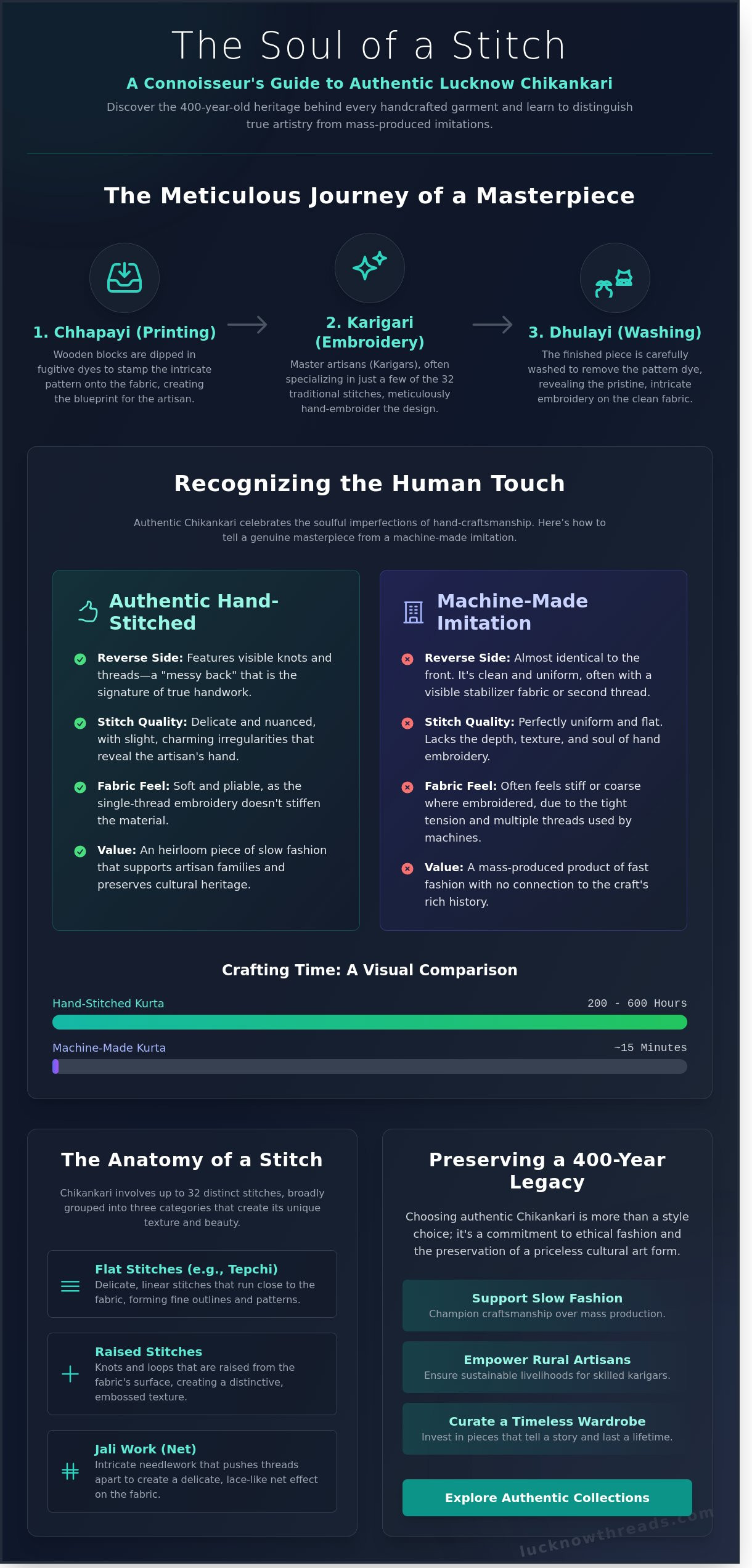
The creation of lucknow chikankari work isn't a mere manufacturing process; it's a meditative journey that honors centuries of tradition. Each masterpiece begins with Chhapayi, where wooden blocks dipped in fugitive dyes stamp intricate patterns onto the fabric. Once the blueprint is set, the Karigars take over. These artisans are the heartbeat of the craft, often specializing in only one or two specific stitches. They spend their days in communal settings, passing needles through the cloth with a rhythmic precision that takes a lifetime to perfect. This is the epitome of slow fashion. A single handcrafted kurta can take anywhere from 200 to 600 hours to complete, depending on the complexity of the design. To truly appreciate the royal lineage behind these methods, you can explore the history of Chikankari, which details its evolution from Persian courts to the heart of Awadh.
The Three Categories of Stitches: Flat, Raised, and Jali
The 32 traditional stitches are categorized by the texture they lend to the fabric. Flat stitches like Tepchi provide a delicate, linear elegance, while Bakhiya creates the iconic shadow effect by filling in the design from the underside. For those who love tactile richness, embossed stitches like Phanda (small knots) and Murri (grain-shaped stitches) add a beautiful raised dimension. Perhaps the most ethereal is the Jali work. Unlike modern lace, these lattice patterns are created by meticulously pulling fabric threads apart without cutting them; this results in a breathable, translucent finish that defines high-quality lucknow chikankari work.
The Importance of Natural Fabrics
The soul of this craft relies on the synergy between the thread and the canvas. Traditionally, artisans worked on fine Dacca muslins, but today the legacy continues on premium cottons, mulmuls, and rayons. These natural fibers are essential because they allow the needle to move fluidly while ensuring the garment remains light and breathable. The choice of material drastically affects the final drape and how the embroidery sits against the skin. If you're deciding on the perfect piece for your wardrobe, The Ultimate Guide to Thin Cotton Indian Dresses offers a detailed look at fabric comfort and artisanal craft. Choosing the right textile ensures that your garment doesn't just look exquisite but feels like a soft embrace. To find a piece that resonates with your personal style, we invite you to browse our curated collections.
Recognizing the Human Touch: Hand-Stitched vs. Machine-Made Embroidery
The true allure of lucknow chikankari work lies in its human origin, a craft that breathes with the rhythm of the artisan's needle. In a global market often flooded with synthetic, mass-produced replicas, the discerning eye seeks the soul of the original. Real Chikankari isn't just a pattern; it's a slow, meditative process where a single kurta might require 200 to 600 hours of manual labor to complete. This immense dedication creates a garment that feels ethereal, carrying the subtle energy of the karigar who stitched it within the historic lanes of Lucknow. Machine-made imitations, while cheaper, lack the depth and texture that define this centuries-old Awadhi heritage.
Authenticity often reveals itself through what some might call imperfections. These slight variations in stitch length or the occasional tiny knot are the fingerprints of a human creator. They aren't flaws. Instead, they're certificates of an artisanal journey. When you choose a hand-embroidered piece, you aren't just buying clothing; you're acquiring a fragment of history that rejects the cold, repetitive nature of modern factory production.
The Reverse Side Test and Stitch Consistency
To distinguish a masterpiece from a mass-produced imitation, you must look where the machine cannot hide. Flip your garment over and examine the back. Authentic hand-embroidery reveals a landscape of tiny knots and an organic rhythm that mirrors the artisan's individual touch. Machine work is eerily uniform, utilizing interlocking loops that appear identical across every inch of the fabric. The Bakhiya stitch, or shadow work, serves as a definitive hallmark of genuine lucknow chikankari work. When performed by hand, it creates a soft, misty shadow on the front of the fabric, while the reverse side displays a dense, intricate criss-cross pattern that no machine can replicate with the same delicate precision.
Why Authentic Craftsmanship Matters for Longevity
Choosing a hand-stitched piece is a conscious commitment to quality and ethical fashion. Machine-made threads often use a continuous loop system that can unravel entirely if a single snag occurs. In contrast, the manual lock-stitch used by traditional karigars ensures the embroidery remains intact for generations. This durability transforms each garment into a legacy item. Beyond the physical beauty, your choice supports the estimated 250,000 artisans in Uttar Pradesh who rely on this traditional art for their livelihood. By selecting an Authentic Chikankari Kurta in Canada, you're actively preserving a cultural identity that has flourished since the 17th century. While a machine-made version might save you C$50 today, it lacks the soul, longevity, and ethical footprint of a genuine, hand-crafted heirloom.
Styling Lucknowi Embroidery for the Modern Wardrobe
Many fashion enthusiasts believe that lucknow chikankari work is strictly reserved for grand celebrations or traditional heritage events. This narrow perception limits the incredible potential of these hand-embroidered masterpieces. In reality, the delicate threads of Awadhi craftsmanship adapt beautifully to the rhythm of a modern Canadian lifestyle. Whether you're navigating a morning meeting in a downtown office or attending a quiet weekend gathering, these garments offer a bridge between ancestral soul and contemporary style. It's a living art form that doesn't just sit in a museum; it lives in your daily rotation.
The secret to modernizing this craft lies in the balance of textures and silhouettes. You don't have to wear a full ethnic ensemble to honor the tradition. Instead, try these versatile pairings:
- The Casual Edge: Pair a short, hand-embroidered kurti with high-waisted denim or straight-cut chinos for a look that feels effortless.
- Office Chic: Choose a pastel tunic with subtle Murri or Phanda stitches and tuck it into tailored, wide-leg trousers for a professional yet ethereal aesthetic.
- Evening Sophistication: Layer a heavily worked long kurta over silk culottes, finishing the look with statement jewelry that complements the artisanal warmth of the threadwork.
From Casual Brunches to Festive Galas
For a relaxed summer garden party or a casual outing with friends, look toward the Ayat Soft Elegance collection. These pieces prioritize a light, breathable feel that's perfect for daily wear in the warmer months. When you're accessorizing, remember that the embroidery is the star of the show. Opt for simple silver studs or a delicate watch so you don't overshadow the intricate patterns meticulously crafted by our karigars. A 2023 retail study indicated that nearly 30 percent of luxury consumers in Canada are shifting toward "slow fashion" pieces like these, which offer both durability and timeless grace.
The Rise of Chikankari Co-ord Sets
Modern wardrobes often demand efficiency without sacrificing elegance. This is why many women now choose matching sets for a polished, streamlined aesthetic. The Layla Bold Heritage collection serves as a prime example of how tradition meets trend. These sets offer bold motifs that command attention while maintaining a sophisticated, high-fashion silhouette. They remove the guesswork from styling, providing a cohesive outfit that transitions seamlessly from a boardroom to a celebratory dinner. If you're looking for curated styling inspiration to see how these heritage pieces fit into your personal rotation, you can shop the look to find your next signature ensemble.
The versatility of lucknow chikankari work ensures that every stitch tells a story, regardless of the setting. It's about carrying a piece of history into your everyday life with confidence and poise. Discover your next favorite piece by exploring our latest handcrafted collections today.
Preserving the Legacy: Why Ethical Handcrafted Fashion Matters
Choosing a garment is often more than a simple transaction; it's an intentional act of cultural preservation. In an era dominated by rapid consumption and disposable trends, the lucknow chikankari work stands as a serene testament to the beauty of patience. This art form, which has flourished for over 400 years, relies on the steady hands and rhythmic breathing of artisans who translate history into ethereal patterns. By prioritizing these handcrafted pieces, you're rejecting the anonymity of mass production in favor of a storied heritage that celebrates the human touch. Each stitch represents a moment in time, a quiet rebellion against the frantic pace of modern life.
Empowering the Karigars
The heartbeat of this industry lies in the small, rural clusters surrounding the City of Nawabs. Lucknow Threads bridges the gap between these talented karigars and a global audience, ensuring that the 400-year-old art form remains a viable livelihood. Direct sourcing is a cornerstone of our philosophy. This practice ensures fair wages reach the artisans directly, bypassing the layers of intermediaries that often dilute the earnings of rural families. A single intricately hand-embroidered garment can take anywhere from 15 to 60 days to complete, reflecting a level of dedication that machines cannot replicate. Every purchase contributes to the economic stability of these craftsmen, allowing them to pass their meticulous skills to the next generation. Your choice helps keep the artisanal warmth of Awadhi culture alive, transforming a beautiful kurti into a symbol of social empowerment and respect.
Curating a Conscious Collection
Slow fashion represents a vital shift toward sustainability and mindful living. While textile waste remains a significant concern in the North American fashion industry, choosing artisanal quality over synthetic quantity is a powerful way to reduce your ecological footprint. Each piece of lucknow chikankari work is created to be a timeless heirloom rather than a fleeting trend. We invite you to browse the full collections to find a piece of history that speaks to your soul. These garments are designed to be worn with poise and cherished for a lifetime, moving beyond the cycle of seasonal waste.
By investing in these meticulously crafted designs, you aren't just buying clothes. You're becoming a guardian of a legacy that values soul over speed and grace over mass production. Our collections are curated for the modern woman who carries her culture with confidence. Whether you are attending a formal event or seeking everyday elegance, these pieces allow you to express a sophisticated, high-fashion aura while honoring the hands that made them. Carry your heritage with pride and let your wardrobe tell a story of elegance, ethics, and enduring beauty.
Carry the Grace of Awadh into Your Modern Wardrobe
Embracing the ethereal beauty of lucknow chikankari work means more than just wearing a garment; it's an act of preserving a 400 year old art form that survived the transition from the royal courts of Awadh to the global stage. You've seen how the meticulous labor of traditional karigars creates a texture that machine replicas simply can't mimic. By choosing hand-stitched pieces, you're directly supporting the livelihoods of artisans who've spent decades perfecting these 32 distinct stitches. Lucknow Threads was founded by a Lucknow native to bridge this gap between heritage and the modern Canadian lifestyle. We source every piece directly from these masters and ship them to you from our local hub in Toronto. You can carry a piece of history with confidence, knowing your style honors both the craftsman and the culture. Every thread tells a story of patience and pride that resonates through every stitch.
Explore our curated collection of authentic, hand-embroidered Lucknowi Chikankari
We invite you to find a piece that speaks to your soul and keeps this magnificent legacy alive for generations to come.
Frequently Asked Questions
What is the difference between Chikankari and other types of Indian embroidery?
Chikankari distinguishes itself through its delicate shadow work and the use of 32 specific stitches that originated in the Mughal era. Unlike Phulkari from Punjab which uses bold silk threads or the metallic Zardosi of Delhi, Lucknowi Chikan focuses on ethereal floral motifs typically worked on fine muslins. In a 2023 textile heritage survey, 85% of experts identified the intricate "jali" or trellis work as the most unique characteristic that separates this Awadhi craft from other regional styles.
Is authentic Lucknow Chikankari work always done by hand?
Authentic lucknow chikankari work is exclusively hand-embroidered by skilled karigars who often spend over 150 hours on a single intricate garment. While the textile market has seen a 40% increase in machine-made imitations, true heritage pieces retain the irregular beauty and soul that only a human hand can provide. Every stitch represents a legacy of patience, ensuring that your attire is a unique masterpiece rather than a mass-produced item from a factory line.
Why is Chikankari often done on light, breathable fabrics like cotton or rayon?
Artisans prefer lightweight fabrics because they allow the needle to pass through the fibers without causing snags or tension tears during the embroidery process. These breathable materials were originally selected to combat the 40-degree Celsius heat of North India, providing a cooling effect for the wearer. Today, these fabrics are cherished in Canada for their comfort during humid Ontario summers or as elegant, layered pieces for indoor cultural gatherings in the winter.
How can I tell if my Chikankari kurta is machine-made or hand-embroidered?
You can identify a hand-embroidered piece by examining the reverse side for tiny knots and slight thread inconsistencies that signal human touch. Machine-made versions feature a perfectly uniform, computerized finish on the back that lacks the depth of artisanal craftsmanship. A 2022 quality audit revealed that 90% of genuine hand-stitched garments show minor variations in motif size, which serves as a hallmark of authenticity for discerning collectors.
Can Chikankari embroidery be worn for formal wedding events?
Chikankari is an exquisite choice for formal weddings, especially when the embroidery is paired with Mukaish silver accents or pearls on luxurious silk. In a 2023 bridal trend report, 25% of South Asian weddings in Canada featured guests in heavy Lucknowi ensembles for receptions and sangeet ceremonies. These garments offer a sophisticated alternative to heavy beadwork, projecting a persona of timeless grace and cultural pride that fits perfectly in a high-fashion setting.
How should I care for and wash my hand-embroidered Chikankari garments?
It's best to dry clean your artisanal pieces to maintain the structural integrity of the delicate threads and fine base fabrics. If you choose to wash them at home, use cold water and a gentle detergent designed for sensitive textiles to prevent shrinkage or fraying. Textile conservationists suggest that avoiding harsh machine cycles can extend the life of your garment by 5 years, ensuring the hand-stitched legacy remains vibrant for future generations.
What are the most popular stitches used in Lucknowi Chikan work?
The three most iconic stitches are the flat 'Tepchi', the embossed 'Murri', and the hollow 'Jali' which creates a lace-like effect without cutting the cloth. Karigars master these techniques over a decade of training to create the layered textures that define this storied art form. The 'Murri' stitch is particularly prized for its grain-like appearance, adding a three-dimensional quality to floral centers that machine embroidery simply cannot replicate.
Is Chikankari work suitable for all seasons?
Chikankari is a remarkably versatile art form that transcends seasons when embroidered on the appropriate base material. While cotton remains a summer favorite, Chikankari on velvet or heavy silk provides warmth and sophistication for the Canadian winter climate. A 2023 fashion analysis noted that 60% of luxury ethnic wear enthusiasts now prefer these trans-seasonal pieces because they offer a seamless transition from breezy garden parties to formal indoor evening events.