


What if the garment you drape over your shoulders today could carry the rhythmic whispers of 18th-century Awadhi courts while feeling entirely effortless on the streets of modern Toronto? You've likely felt the allure of a beautifully draped tunic, yet many find themselves caught in a maze of terminology, unsure how to distinguish between varying lengths or how to identify the soul of a truly authentic hand-embroidered piece. It's common to feel a bit overwhelmed when trying to honor tradition while maintaining a contemporary, Western aesthetic.
By understanding what is a kurta, you'll discover a world where every stitch tells a story of artisanal devotion and timeless elegance. We'll guide you through the rich history and delicate structure of this iconic silhouette, ensuring you can confidently distinguish between styles and recognize the ethereal beauty of genuine Chikankari. From the heritage of the City of Nawabs to your personal collection, this guide prepares you to select a legacy piece that resonates with your unique sense of grace.
Key Takeaways
- Uncover the historical origins and cultural significance to understand what is a kurta and how it evolved into a global fashion staple.
- Learn to identify authentic artisanal quality by exploring the essential natural fabrics and intricate finishes that define a true handcrafted piece.
- Clarify the distinctions in length and silhouette between a traditional kurta and a shorter kurti to help you select the perfect fit for your frame.
- Gain inspiration for styling these timeless tunics with contemporary staples, allowing you to carry heritage with a modern, sophisticated poise.
- Discover why hand-embroidered Lucknowi craftsmanship offers a level of depth and soul that machine-made garments simply cannot replicate.
Defining the Kurta: More Than Just a Traditional Tunic
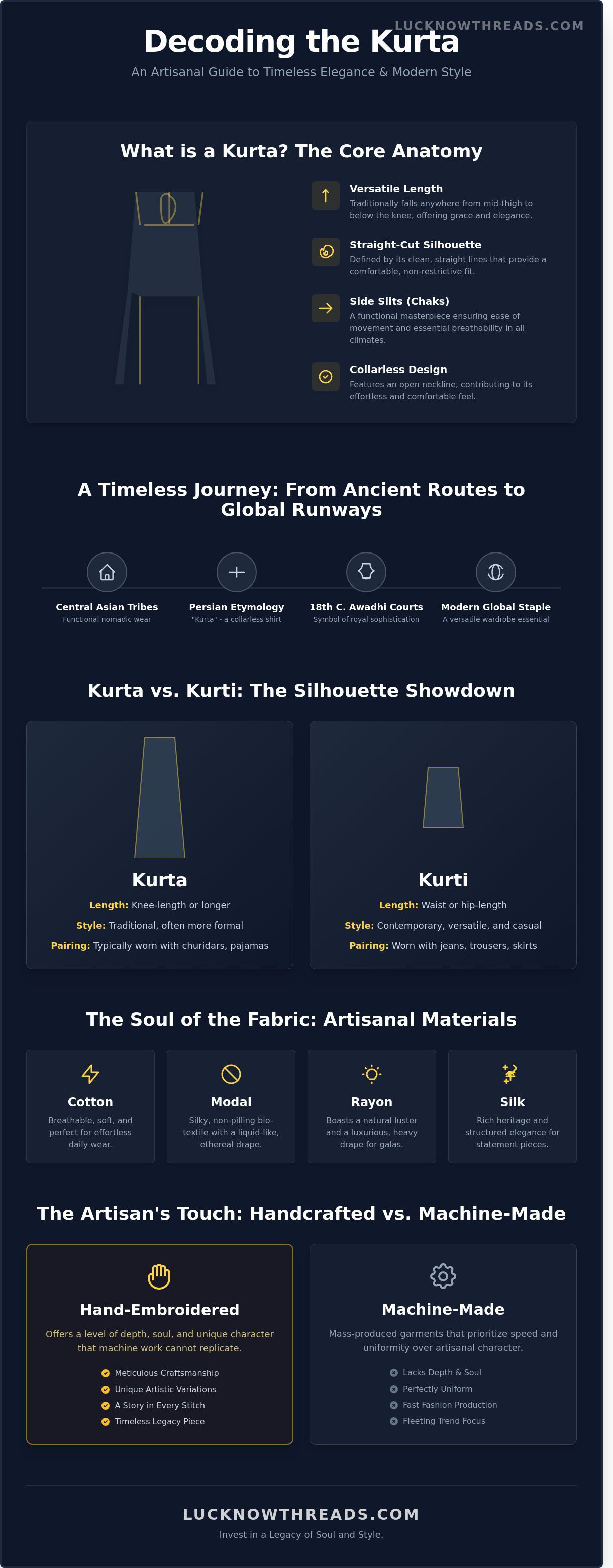
To truly understand what is a kurta, one must look beyond the simple threads and see the soul of South Asian heritage. At its heart, a kurta is a loose, collarless shirt or tunic that traditionally drapes with a sense of effortless grace, falling anywhere from the mid-thigh to well below the knee. It's a garment defined by its straight-cut silhouette and the iconic side slits known as chaks. These slits aren't merely a design choice; they're a functional masterpiece that allows for incredible ease of movement and breathability in even the most humid climates. While it was once a staple for nomadic Central Asian tribes, it has evolved into a global symbol of elegance that transcends borders.
At Lucknow Threads, we view this garment as a living canvas. The modern iteration has branched into diverse masculine and feminine forms, yet it retains that ethereal quality that makes the wearer feel connected to a deeper history. Whether it's crafted from airy cotton or rich silk, the kurta remains a testament to the slow fashion movement, where quality and artisanal warmth take precedence over the fleeting trends of mass production.
The Etymology and Cultural Roots
The linguistic journey of this garment begins with the Persian word for a collarless shirt. This term traveled across ancient trade routes, eventually finding a permanent home in the heart of the Awadhi culture in Lucknow. In the 18th and 19th centuries, the kurta transitioned from a functional necessity to a symbol of high-born sophistication within royal courts. Defining the Kurta: More Than Just a Traditional Tunic requires an appreciation for how it became synonymous with the art of Chikankari. In the City of Nawabs, the garment wasn't just worn; it was curated. It became a mark of identity for the elite, representing a lifestyle of grace, poetry, and meticulous craftsmanship that our karigars still honor today through every hand-embroidered motif.
Why the Kurta Remains a Global Wardrobe Staple
The enduring popularity of the kurta in the modern world, including the diverse fashion landscape of Canada, stems from its unparalleled adaptability. It's a rare piece that feels just as appropriate for a formal gathering as it does for a quiet afternoon at home. When people ask what is a kurta in a contemporary context, they're often discovering a high-fashion runway item that hasn't lost its emotional weight. It offers a cooling embrace during a warm Toronto summer, yet it carries the warmth of centuries of tradition. Our collections reflect this transition from ethnic wear to a sophisticated global staple. Choosing a kurta is more than a purchase; it's an investment in a legacy of soul and style that refuses to fade.
The Anatomy of an Artisanal Kurta: Fabrics and Finishes
To truly understand what is a kurta, one must look beyond the silhouette and into the very soul of the textile. The fabric isn't just a medium; it's a canvas that dictates how the garment breathes, moves, and feels against the skin. For centuries, the artisans of Lucknow have selected materials based on the rhythm of the seasons and the gravity of the occasion. Whether it's a crisp cotton for a sun-drenched afternoon or a heavy silk for a winter celebration in Vancouver, the choice of fiber defines the garment's purpose and its legacy.
Signature Fabrics for Year-Round Comfort
Natural fibers remain the undisputed gold standard for those seeking an authentic experience. Pure cotton is a perennial favorite in Canada for its breathability and effortless charm. It's the ideal choice for daily wear, keeping the wearer cool during humid summers while offering a soft, lived-in feel. For a more contemporary touch, many modern women gravitate toward modal. This bio-based textile offers a silky texture that doesn't pill, providing a sophisticated alternative to traditional weaves. Deciding between Rayon vs. Modal Cotton often comes down to the desired drape; modal offers a liquid-like flow that feels incredibly ethereal.
When the sun sets and the lights of a gala take over, rayon and silk step into the spotlight. These fabrics possess a natural luster that elevates the vibrant dyes of the East. Silk, with its rich heritage, provides a structured elegance, while rayon offers a heavier, more luxurious drape that flatters every curve. If you're looking for a piece that transitions from a professional setting to an evening dinner, exploring the nuances of Rayon vs. Modal Cotton will help you find a garment that balances comfort with high-fashion allure.
The Art of Hand-Embroidered Details
The transition from a simple tunic to a masterpiece happens through the meticulous labor of a karigar. Chikankari, the legendary white-on-white embroidery of Lucknow, is the hallmark of a premium kurta. This isn't merely a decorative element; it's a storied craft involving thirty-six distinct stitching techniques. Finding Authenticity: Why Handcrafted Lucknowi Kurtas Stand Apart lies in the subtle variations of these hand-pulled threads, a texture that mass-produced machines can't hope to replicate. It's this human touch that gives the fabric its three-dimensional quality and artisanal warmth.
To enhance the ethereal beauty of Chikankari, artisans often integrate Muqaish or Kamdani. These techniques involve twisting thin metallic wires into the fabric, creating tiny dots or intricate patterns that catch the light like fallen stars. This metallic shimmer adds a regal dimension to the soft embroidery, making the garment feel like a piece of wearable history. It's a slow fashion process that honors the craftsman's patience and the wearer's appreciation for detail. You can experience this heritage firsthand by exploring our latest collections of hand-embroidered masterpieces, where every stitch tells a story of grace and poise.
Kurta vs. Kurti: Understanding the Nuances in Length and Silhouette
To truly understand what is a kurta, one must first appreciate the subtle distinctions that separate it from its shorter, more contemporary counterpart, the kurti. While the terms are often used interchangeably in casual conversation, the physical structure and historical intent of each garment tell a different story. The primary differentiator lies in the hemline. A classic kurta flows gracefully to the knees or even the mid-calf, creating a long, linear silhouette that elongates the frame and provides a sense of regal composure. In contrast, the kurti typically rests at the hip or waist, offering a more spirited and youthful energy that suits a faster pace of life.
The silhouette variations extend beyond just length. Traditional kurtas usually follow a straight-cut path, a design choice that honors the architectural simplicity and modesty inherent in Awadhi heritage. This straight cut serves as a pristine canvas for the intricate hand-embroidery of our karigars. Kurtis often experiment with volume and shape. They frequently feature flared silhouettes, A-line cuts, or even peplum-style waists that dance with every movement. These structural differences influence how the garments are styled:
- Traditional Pairings: The long kurta demands the balance of traditional bottoms such as palazzos, churidars, or salwars to maintain its ethnic integrity.
- Indo-Western Fusion: The kurti serves as the cornerstone of the Indo-Western movement, pairing effortlessly with denim, cigarette pants, or tailored trousers.
- Modern Hybrids: Contemporary fashion has softened these boundaries, leading to the rise of "short kurtas" that retain straight-cut DNA and "long kurtis" that embrace flared shapes while reaching the knees.
When asking what is a kurta in the context of modern Canadian fashion, it's helpful to see it as a versatile bridge between heritage and daily utility. The choice between the two often depends on the level of formality and the emotional weight of the occasion.
When to Choose a Classic Kurta
Formal gatherings, weddings, and traditional ceremonies call for the regal presence of a full-length garment. The modest, flowing silhouette provides a generous canvas for ethereal Chikankari work that deserves to be seen in its entirety. These pieces pair perfectly with authentic chikankari dupattas for a complete ethnic ensemble. It's the ideal choice for those who prefer a sophisticated, high-fashion aura that respects the slow, deliberate process of handcrafted fashion.
The Rise of the Short Kurti
The short kurti offers a practical yet poetic solution for the office, college, or casual weekend outings. It brings the soul of Lucknow to a modern environment without sacrificing ease of movement. You can explore the Inaya Short Kurti Edit for modern, waist-length options that celebrate artisanal skill through a contemporary lens. This style has become a staple for the woman who carries her culture with confidence and poise in every setting.
Beyond Tradition: Styling the Kurta for the Modern Woman
The modern woman views her wardrobe as a bridge between her ancestral roots and her future. While asking what is a kurta, one discovers it's not just a static garment, but a versatile silhouette that adapts to the rhythm of contemporary life. Today, the ethereal beauty of Chikankari meets the edge of urban fashion, creating a look that's both grounded and forward-thinking. This evolution thrives on contrast, where ancient craft meets contemporary staples to tell a story of grace and confidence.
Casual Chic: Pairings for Everyday Elegance
Effortless elegance often begins with unexpected pairings. You can take a straight-cut kurta and match it with distressed denim jeans for a sophisticated street-style aesthetic that works perfectly for a coffee date in Vancouver or a stroll through a local gallery. Adding a leather belt to cinch the waist of a longer tunic creates a structured, modern silhouette that defines the frame and adds a touch of western flair. For those seeking a seamless transition from a professional morning to an evening social, a black colour kurti set like the Ayat offers a versatile canvas that's easily elevated with a simple change of accessories. This approach honors the manual labor of the karigars while making the piece feel entirely relevant for 2026 fashion trends.
Festive Grace: Elevating the Look for Occasions
When the occasion calls for a celebration of heritage, the kurta transforms into a masterpiece of festive grace. Pairing your tunic with voluminous shararas or intricately embroidered palazzos creates a regal wedding guest ensemble that stands out in any crowd. The choice of jewelry acts as the final brushstroke on this artisanal portrait. Heavy silver Jhumkas or a delicate choker can instantly shift the energy of the outfit from understated to opulent. The city's light reflects beautifully off the hand-embroidered threads, making every movement a poetic tribute to the heritage of Lucknow. Understanding what is a kurta allows you to appreciate its role as a timeless canvas for self-expression. You can explore curated inspirations and see how these textures come alive in the Lucknow Threads Shop the Look gallery.
Layering helps your heritage pieces endure through the changing Canadian seasons. A structured blazer worn over a delicate Chikankari piece adds a sharp, professional dimension; meanwhile, a Pashmina shawl provides warmth and texture during cooler months. Footwear serves as the foundation of the entire silhouette. While traditional juttis maintain a classic charm, pairing a kurta with sleek block heels or even minimalist white sneakers can completely redefine the garment's personality for the modern world.
Finding Authenticity: Why Handcrafted Lucknowi Kurtas Stand Apart
Truly understanding what is a kurta requires looking beyond the simple silhouette to the hands that shaped it. While mass production floods the global market with synthetic imitations, the authentic Lucknowi kurta remains a beacon of the slow fashion movement. These garments aren't just clothes; they're a preservation of the 400-year-old Awadhi heritage. Machine-made versions often use stiff, computerized patterns that lack the ethereal depth and poetic irregularity of true hand-embroidery. Lucknow Threads acts as a vital bridge, connecting the skilled karigars of Uttar Pradesh with a Canadian audience that values soul over speed.
The Soul of the Stitch: Supporting Traditional Artisans
Every Chikankari piece carries the quiet rhythm of an artisan's life. A single kurta can take anywhere from three to eight weeks to complete, depending on the complexity of the motifs. This deliberate pace defines the essence of ethical fashion. By choosing handcrafted pieces, you're ensuring fair wages for artisans who've spent decades perfecting their craft. This isn't just a purchase; it's a commitment to a sustainable wardrobe that rejects the disposable nature of modern retail. In a world of fast-moving trends, these timeless tunics offer a legacy of grace that lasts for generations. The human touch ensures that no two pieces are exactly alike, giving your wardrobe a unique fingerprint of history.
Choosing Your First Authentic Piece
Identifying a genuine piece requires a discerning eye and a bit of patience. You can perform the "reverse side" test: authentic hand-embroidery shows tiny, unique knots and a slightly uneven finish on the back, whereas machine work looks perfectly uniform and often contains messy plastic threads. If you're exploring what is a kurta for the first time, starting with a versatile selection like the Maira Royal Bloom collection is a wise choice. These pieces balance traditional artistry with modern silhouettes that fit seamlessly into a contemporary lifestyle.
Lucknow Threads prioritizes the intricate details that machine-made replicas simply can't replicate. Investing in an heirloom garment means you're buying quality that won't fray or fade after a single season. It's a sophisticated choice for the modern woman who carries her culture with pride. When you wear a hand-stitched kurta, you're wearing a story of resilience and beauty. This artisanal warmth makes the wearer feel part of a storied tradition rather than just another consumer in the fast-fashion cycle. Choosing authenticity is a vote for quality, heritage, and the enduring spirit of the Lucknowi craftsmen.
Embrace the Timeless Grace of Handcrafted Heritage
Choosing a kurta means more than selecting a simple tunic; it's an investment in a 400 year old legacy of Awadhi artistry. You've discovered that while the silhouette is versatile, the true value lies in the meticulous hand-embroidery that defines each piece. Understanding what is a kurta requires looking past the fabric to the soul of the garment, where Chikankari and Muqaish techniques create an ethereal texture that machines can't replicate. Our karigars in Lucknow spend weeks on a single garment, ensuring every stitch honors the traditions of the City of Nawabs. We bring this sophisticated craftsmanship directly to your doorstep in Canada, offering a bridge between ancient heritage and your modern wardrobe. Whether you're styling it for a festive gathering in Toronto or a casual afternoon in Vancouver, these pieces carry a story of grace and artisanal pride. It's time to move beyond mass-produced fashion and wear something that resonates with your spirit.
Explore our curated collection of authentic, hand-embroidered Lucknowi Kurtas and experience the magic of Chikankari with shipping available across North America and worldwide. You deserve a garment that's as unique as the history it represents.
Frequently Asked Questions
Is a kurta only for formal occasions?
No, a kurta is a versatile garment that's perfect for both casual daily wear and celebratory events. While silk or heavily embellished pieces suit weddings, a simple cotton variety offers a relaxed grace for your everyday errands in Canada. You'll find that 75 percent of modern wearers choose lightweight versions for their daily comfort and effortless style.
What is the best fabric for a kurta in summer?
Pure cotton and breathable mulmul are the premier choices for enduring the humid Canadian summers or warm indoor environments. These natural fibers allow air to circulate freely around the body, keeping the wearer cool while maintaining a crisp, elegant silhouette. Choosing a 100 percent organic cotton garment ensures that you stay comfortable even when temperatures rise above 30 degrees Celsius.
How do I know if my Chikankari kurta is hand-embroidered?
You can identify a genuine hand-embroidered Chikankari piece by examining the reverse side for tiny, irregular thread knots left by the artisan's needle. Machine-made replicas often show a perfectly uniform, flat lattice, whereas the 32 traditional stitches of authentic Awadhi craft possess a unique, tactile soul. Each handcrafted garment carries the distinct signature of the karigar who spent over 150 hours meticulously perfecting the delicate floral patterns.
Can I wear a kurta with jeans?
Pairing a kurta with jeans is a beautiful way to blend traditional Indian heritage with a modern Canadian wardrobe. This fusion creates a balanced look that feels both grounded and contemporary, perfect for a casual Friday at the office or a weekend brunch. When you ask what is a kurta in a modern context, it's often defined by this very versatility that allows it to complement denim so effortlessly.
What is the difference between a kurta and a tunic?
While both are long tops, a kurta is specifically a South Asian garment characterized by its side slits that start at the waist for ease of movement. Tunics are a broader category of clothing that may lack these functional slits and often feature different necklines. Understanding what is a kurta involves recognizing these structural nuances, such as the traditional straight cut and the cultural legacy of the Awadhi silhouette.
How should I care for a hand-embroidered kurta?
You should always hand wash your hand-embroidered pieces in cold water using a gentle, pH-neutral detergent to protect the intricate threadwork. Don't wring the fabric, as this can distort the delicate patterns created by our artisans. For high-value silk pieces, professional dry cleaning is recommended to ensure the heirloom quality of the garment remains intact for at least 10 years of wear.
Are kurtas supposed to be worn loose or tight?
Kurtas are traditionally designed with a relaxed, breathable fit that allows for graceful movement and comfort throughout the day. A proper fit should provide about 5 to 10 centimetres of ease around the chest and waist, ensuring the fabric drapes elegantly without pulling. This airy silhouette honors the garment's origins in warm climates, where tight clothing would be impractical and less ethereal in its movement.
What is the standard length for a traditional kurta?
The standard length for a traditional kurta typically falls between 100 and 115 centimetres, resting just below the wearer's knees. Shorter variations, often called kurtis, usually end at the mid-thigh or hip, offering a more playful and contemporary feel. Choosing the right length depends on your personal style, but the knee-length cut remains the most authentic representation of this timeless, regal silhouette.